

























































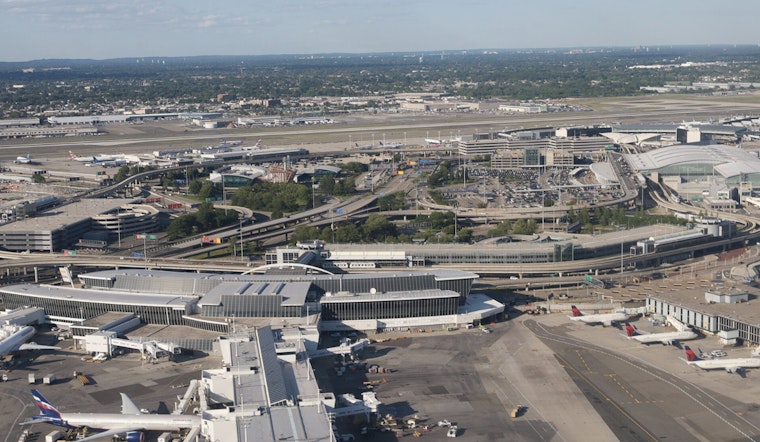
There were some white knuckles in the skies over Queens on Monday when a regional Delta Connection jet and a small private Cirrus wound up far closer than anyone would like on final approach to John F. Kennedy International Airport. The regional crew reported first a traffic advisory and then a resolution advisory from the jet's collision‑avoidance system as the two aircraft climbed into the same slice of airspace. Both planes stayed under control and landed without incident, but cockpit and tower recordings capture the tense moments as controllers urgently pointed each crew toward the other aircraft.
On the air‑traffic‑control frequency, a controller can be heard warning the Endeavor Air operated Delta Connection flight that an unidentified Cirrus single‑engine plane was about 500 feet above them. The regional pilot then reported that their system issued a traffic advisory followed by a resolution advisory, although the RA did not call for an immediate maneuver. Preliminary tracking data shows the two aircraft came within roughly 475 feet vertically, with the regional jet at about 2,100 feet and the Cirrus near 2,575 feet, and the Endeavor crew told controllers they had the smaller plane in sight. According to ABC7 New York, ABC News has reached out to the FAA for comment.
How collision-avoidance alerts work
Modern airliners and many smaller aircraft carry Traffic Collision Avoidance Systems that are designed to step in when normal separation breaks down. First comes a Traffic Advisory, or TA, that tells pilots another aircraft is getting uncomfortably close. If things tighten further, the system escalates to a Resolution Advisory, or RA, which can direct pilots to climb or descend to open up space.
The FAA's controller rulebook, Order JO 7110.65, instructs air‑traffic controllers not to issue instructions that conflict with a crew responding to an RA, and pilots are trained to follow those automated commands as standard procedure. Aviation explainers such as Flightradar24 describe TAs and RAs as the last line of automated defense that keeps aircraft from trading paint when human sequencing slips.
A worrying pattern
This latest scare drops into an already growing pile of close calls at busy U.S. hubs. In recent weeks, that has included an April 20 incident at JFK in which two regional jets triggered TCAS alerts while flying parallel approaches, prompting an FAA investigation and fresh focus on how separation can erode in crowded arrival streams. Aviation watchers say episodes like these have put tower staffing levels and day‑to‑day procedures at the country's busiest airports under renewed scrutiny.
It also came on the heels of a May 3 event in which a United Airlines jet struck a light pole and clipped the roof of a tractor‑trailer on the New Jersey Turnpike while landing at Newark Liberty International Airport. No major injuries were reported, and the NTSB said it would send an investigator, according to AP. Federal and airline teams inspected the aircraft, and a preliminary inquiry is in progress as officials gather flight‑data information and tower recordings.
For the JFK run‑in, investigators are expected to dig into radar data, cockpit audio, tower tapes and onboard records to figure out how the separation shrank and whether everyone followed the rulebook. Regulators say no passengers or crew were injured, but the near miss is almost certain to fuel new calls to take a hard look at how the crowded New York area airspace is being managed.





