

























































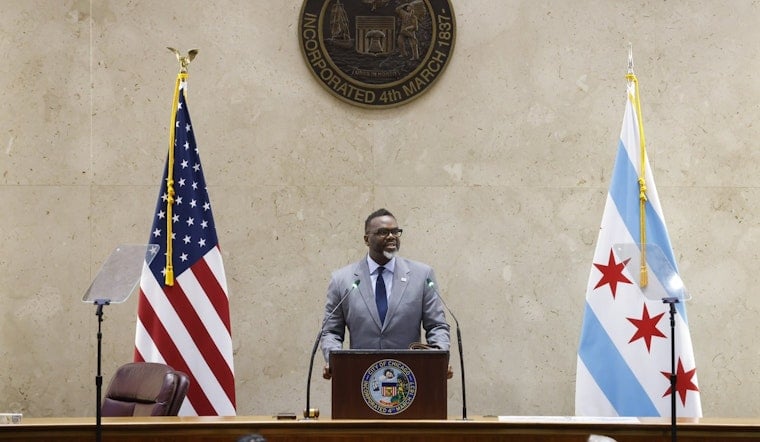
Mayor Brandon Johnson is heading to Springfield this week with a cohort of suburban mayors in a high-stakes push to restore roughly $12.7 million in local revenue that Chicago says it could lose under the governor’s budget plan. At the center of the fight is the Local Government Distributive Fund, the pot of state income tax revenue that is distributed to cities and towns to pay for police, fire, streets and other core services. City officials warn that trimming the municipal share would effectively freeze growth in that revenue stream and leave local governments choosing between service cuts and higher local taxes. The trip is part of a broader municipal push as the General Assembly reviews the governor’s FY2027 proposal.
Mayor, suburbs head to Springfield
As reported by FOX 32 Chicago, Johnson will travel to the state capitol on Wednesday alongside mayors from Broadview, Fox Lake, Lynwood, Palos Hills and other local leaders, according to the mayor’s office. The administration told the outlet that Chicago would lose about $12.7 million if the governor’s change goes through, while suburban leaders estimate the statewide shortfall at roughly $60 million. Palos Hills Mayor Gerald Bennett told FOX 32 that "Protecting LGDF revenues is one of the main items on our Legislative Agenda," a sentiment that neatly sums up the stakes of this midweek road trip.
What the governor proposed
The governor's FY2027 budget would hold LGDF distributions flat by lowering the formula rate that determines the municipal share of individual income taxes, a change that would reduce the percentage sent to local governments from 6.47% to 6.28%. That proposal and its local implications are laid out in the governor’s budget materials and summarized by the Chicago Metropolitan Agency for Planning. Regional planning officials say the tweak would freeze the level of state resources available to local governments even as costs rise.
Why mayors say it matters
Municipal advocates point to decades of cuts to LGDF and warn that smaller shares translate directly to fewer dollars for day-to-day services. The Illinois Municipal League has tracked the program’s history and reductions from a roughly 10% share before 2011 to current levels, as its LGDF fact sheet explains. Critics say those changes have cost municipalities billions, and FOX 32 Chicago reports IML estimates the cumulative loss at nearly $13 billion. Local leaders also stress that LGDF helps offset costs for police, fire and public works, which is why suburbs and Chicago officials are mobilizing to push back, according to reporting by the Daily Herald.
What happens next
The governor released his proposal in February and the General Assembly is now considering the plan while budget documents move through legislative review, the Chicago Metropolitan Agency for Planning notes. Illinois’ fiscal year begins July 1, so lawmakers must resolve funding for FY2027 before the new year starts, per state finance rules. Municipal leaders say they will press legislators during their Springfield visits this week and watch whether negotiations restore the LGDF formula or otherwise offset local losses.
Municipal push continues
The trip builds on years of lobbying and local campaigns aimed at restoring state revenue sharing and expanding municipal tools. Groups including the Metropolitan Mayors Caucus, the Illinois Municipal League and regional coalitions have organized advocacy materials and fact sheets under campaigns such as Invest In Communities to press lawmakers to fully fund shared revenues and preserve local services from ending up on the budget chopping block.




