

























































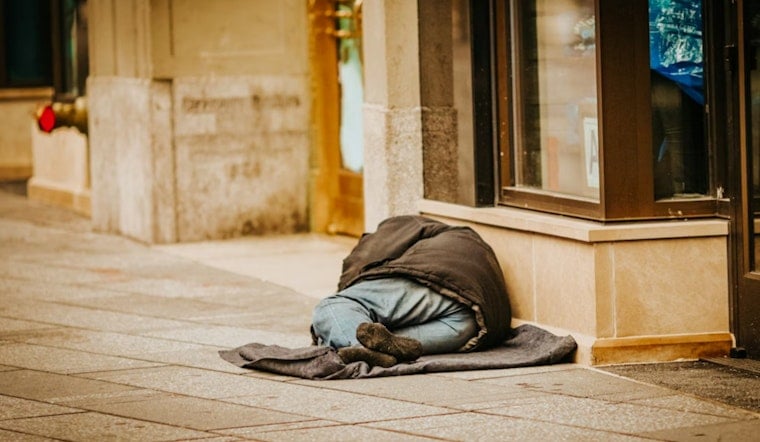
As city crews clear tent encampments in Hollywood and Venice, another story is quietly unfolding at street level: more unhoused Angelenos are now sleeping completely exposed. The rise in so-called rough sleepers, people bedding down on sidewalks, in doorways or under awnings, makes outreach and housing placement tougher and undercuts the simple narrative that homelessness is easing. Many programs and official counts are geared to spot tents and vehicles, not the people trying to sleep with no cover at all.
LA LEADS Data: Fewer Tents, More People Sleeping Rough
The RAND Housing Center's LA LEADS project, which has been counting unsheltered people in Hollywood, Skid Row, and Venice since 2021, found that the share of people sleeping rough has climbed steadily. By December 2024, roughly four in ten unsheltered people in those neighborhoods had no tent, vehicle, or makeshift shelter at night. According to RAND, most of the remaining tents are now concentrated in Skid Row, and people sleeping rough "tend to have greater clinical need," which also makes them harder for outreach teams to locate and serve.
2025 Shifts: Tent Numbers Drop While Rough Sleeping Jumps
Local coverage on May 21, 2026, summed up newer LA LEADS counts and reported that in 2025, rough sleeping rose about 20 percent, roughly 250 people, even as visible tent encampments shrank. Tent dwelling fell about 23 percent, about 310 people, while the number of people living in vehicles rose about 11 percent, around 90 people. As LAist reported, researchers found that for every four tents removed, three people in vehicles or sleeping fully exposed were added on average, a pattern that showed up most clearly in Hollywood. On paper, tents are disappearing; on the sidewalk, human beings are not.
Counting Gaps And The Policy Risk
RAND warns that the county's volunteer-run point-in-time count has increasingly missed people who sleep fully exposed, a blind spot that could steer limited funding away from areas with the highest clinical needs. The Los Angeles Times reported that RAND found the official count captured only about two-thirds of LA LEADS totals in Hollywood, Skid Row, and Venice, and noted that if that gap holds elsewhere, it could mean thousands of unsheltered people across the city were left out. Advocates warn that any system that mainly tracks easy-to-spot tents is almost guaranteed to shortchange the people in the worst shape.
Why Encampment Strategies May Be Hitting A Wall
RAND's analysis links the drop in tents to city initiatives like Inside Safe and enforcement of Los Angeles' anti-camping ordinance, but cautions that these efforts often shuffle people into vehicles or rough sleeping instead of into permanent housing. The report argues that a tent-free sidewalk is not the same thing as a person being housed. It recommends a mixed strategy that includes centralized service hubs, expansion of permanent supportive housing, and sustained behavioral health outreach to reach people who no longer stay in large encampments, according to RAND.
Officials Respond, and What Comes Next
Mayor Karen Bass has defended Inside Safe as effective and pointed to point-in-time count numbers as evidence of progress, while the Los Angeles Homeless Services Authority said it welcomed RAND's critique and planned to compare methodologies, as reported by the Los Angeles Times. Advocates and service providers counter that clearing encampments has to go hand in hand with outreach teams able to track and support rough sleepers wherever they bed down, which will demand tighter coordination and more money. Whether Los Angeles can turn headline-grabbing reductions in tents into durable change will hinge on whether outreach and housing offers actually reach the people who have slipped out of sight of both tarps and official counts.





