

























































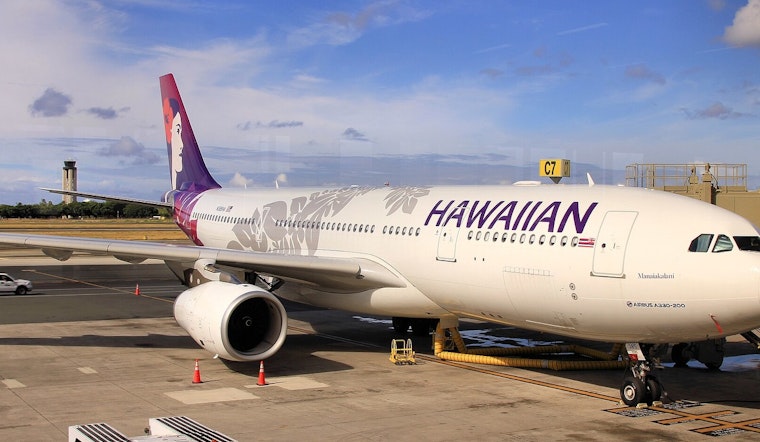
Hawaiian Airlines flight attendants who uprooted their lives to move to Seattle for new long‑haul flying say they are being told that some international trips sold under the Alaska Airlines brand could mean fewer visible touches of “aloha” such as leis, flowers and aloha shirts. About 250 crewmembers were transferred this spring to open a Seattle domicile as the two carriers tighten operations, and the staffing shuffle has thrown a spotlight on Alaska Air Group’s one‑airline, two‑brands strategy. It is also feeding growing pushback from union leaders and island residents.
As reported by the Honolulu Star-Advertiser, reassigned Hawaiian attendants say they have been told that on certain long‑haul routes, especially to Europe and Asia that are marketed as Alaska service, they may be asked to forgo flowers in their hair, leis and traditional aloha shirts. That seemingly small wardrobe tweak, visible both on board and at the gate, has turned into a flashpoint for employees and passengers who see Hawaiian’s signature look as part of the islands’ identity. Reaction has been especially sharp in Honolulu, where the airline’s brand is deeply intertwined with local culture.
Why Alaska Is Keeping Two Brands
Alaska’s leadership insists that preserving Hawaiian’s distinct identity is central to long‑term loyalty, even as many behind‑the‑scenes functions are stitched together. As explained by The Points Guy, the combined carrier received a single operating certificate in October 2025, a key regulatory step that lets it operate under one umbrella. According to Alaska Air Group in its 2025 10‑K, the companies also began migrating to a single reservations platform this spring in an effort to streamline back‑office work.
Company officials say that, on the customer side, the plan is to keep separate onboard products and local partners in order to protect the value of both brands. That balancing act, however, is exactly what has Hawaiian crews asking how far the Alaska styling will go when they are the ones in the aisle pouring coffee.
Union Pushback and the Seattle Base
The Association of Flight Attendants has been documenting its concerns. The union recorded that its Joint Negotiating Committee met with management April 28 to 30 in Seattle to press for guardrails around service standards and appearance rules, and says that bargaining is still active. Union Q&A materials for the Seattle domicile also note plans to staff the new base with roughly 250 Hawaiian flight attendants to support 787 international operations out of the Pacific Northwest hub.
AFA representatives say they are gathering detailed feedback from members on service expectations and uniforms, then plan to push for contractual language that preserves Hawaiian crew traditions wherever they can. For crews who signed up for Hawaiian’s island‑centric vibe, the fear is that “one operation” could quietly turn into “one look.”
Why Hawaiian’s Look Matters
Hawaiian’s Pualani emblem and its onboard rituals are more than a paint job to many island residents. The Pualani mark, the female figure that adorns the tail, was introduced in 1973, according to Hawaiian Airlines, and the carrier points to decades of Hawaii‑focused service that lean heavily on cultural touchstones. For local flyers and staff alike, the visible signs of aloha function as both a hospitality cue and a cultural signal, shaping the passenger experience and reinforcing community pride long before wheels‑up.
Legal and Bargaining Next Steps
Negotiations are poised to continue. The AFA has recorded that the Joint Negotiating Committee’s next bargaining session is set for June 2 to 4, when union leaders say they will press management on appearance rules and enforceable protections in writing. Alaska’s corporate filings and press releases highlight the single‑operating‑certificate milestone in October 2025, and reporting shows that the airlines began cutting over to a single passenger‑service system in April 2026. The company frames those moves as necessary to improve efficiency while still preserving brand distinction.
How those technical and operational milestones translate into contract language for Hawaiian crews will be the central question at the table. For now, the dispute is less about aircraft types and more about what the Hawaiian brand represents to people in the islands. The June bargaining session will be an early test of whether the merged carrier can marry the quest for streamlined operations with the cultural details that matter to island communities, right down to the flowers in a flight attendant’s hair.





