

























































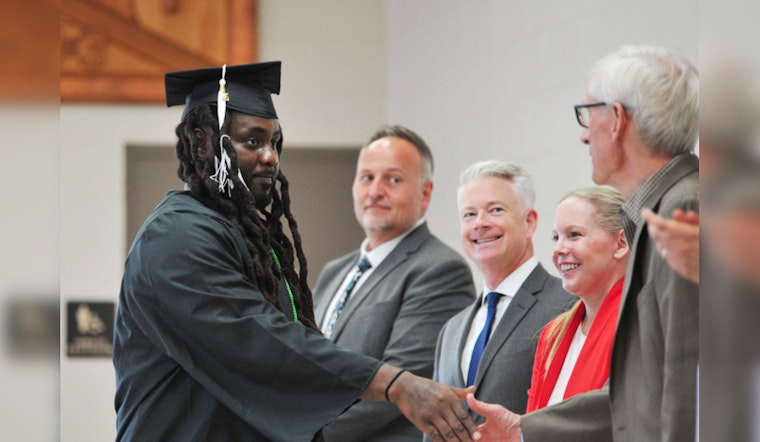
The University of Wisconsin system this week hit a milestone in prison education: several UW campuses conferred bachelor’s degrees on students who were serving time or had only recently left state correctional institutions, the first time in more than 50 years that the system has awarded bachelor’s degrees to incarcerated learners. Ceremonies held both on campus and inside prisons capped years of pilot courses and credential programs built to strengthen reentry prospects and open up better jobs on the outside.
As reported by WTMJ, UW–Green Bay is awarding 15 bachelor’s degrees to current or former residents of Oakhill Correctional Institution this week, along with eight associate degrees. The station also noted that UW–Stout and UW–Eau Claire have bachelor’s cohorts at Stanley Correctional Institution, where six and eight bachelor’s degrees are slated, respectively. State officials told reporters that since the coalition began, hundreds of incarcerated students have earned associate degrees, certificates or workforce badges through the effort.
How the coalition works
The degrees were delivered through the University of Wisconsin Coalition for Higher Education in Prison (UW CHEP), which is coordinated by UW–Madison’s Prison Education Initiative and taught by faculty from across the system. As outlined by UW–Madison, most courses take place face to face inside correctional facilities and are paired with tutoring, academic advising and reentry planning. The coalition’s stated goal is to align coursework with employer needs, reduce recidivism and make the shift back into the community less chaotic for students who are leaving prison.
Campus programs and where degrees were conferred
UW–Green Bay has led associate-level programming at Oakhill and has been building pathways toward bachelor’s completion inside that facility, according to the university’s reporting. UW–Stout has focused on career-oriented bachelor’s coursework at Stanley Correctional Institution, while UW–Eau Claire is delivering a flexible Bachelor of Science in Professional Studies that is designed to work for students who come in with prior college credits. Campus leaders say years of work on badges and associate programs laid the groundwork for today’s full bachelor’s tracks as staffing, curriculum and funding gradually matured.
Pell grants and the evidence
Growth of the programs accelerated after federal policy changes restored Pell-type aid for incarcerated learners. Confined or incarcerated individuals became eligible for Pell Grants when they enrolled in an approved Prison Education Program as of July 1, 2023, according to the U.S. Department of Education. Research has given policymakers plenty of cover. A meta-analysis from RAND found that correctional education significantly lowers the odds of recidivism, with program participants showing much lower rates of re-incarceration than peers who did not enroll. In many of the analyses, participation in prison education was associated with roughly 40 to 50 percent lower odds of recidivating.
Political and corrections leaders framed the graduations as a pragmatic public policy move rather than a soft-on-crime gesture. Gov. Tony Evers called the effort a “common-sense strategy,” as reported by WTMJ. Wisconsin Department of Corrections Secretary Jared Hoy, who spoke at an earlier ceremony, said the programs give students practical tools for reentry: “There’s nothing I can say that will outshine your stories. This is just the beginning of the positive things you will do beyond prison,” according to UW–Madison.
Administrators see these first bachelor’s completions as proof of concept, not a finish line. They expect to expand faculty involvement, advising and employer partnerships as more cohorts move from badges and associate credentials into full degree tracks. How fast bachelor’s programs can grow inside Wisconsin prisons, they say, will hinge on funding stability, federal rules and whether local employers keep showing up to hire the new graduates.




