

























































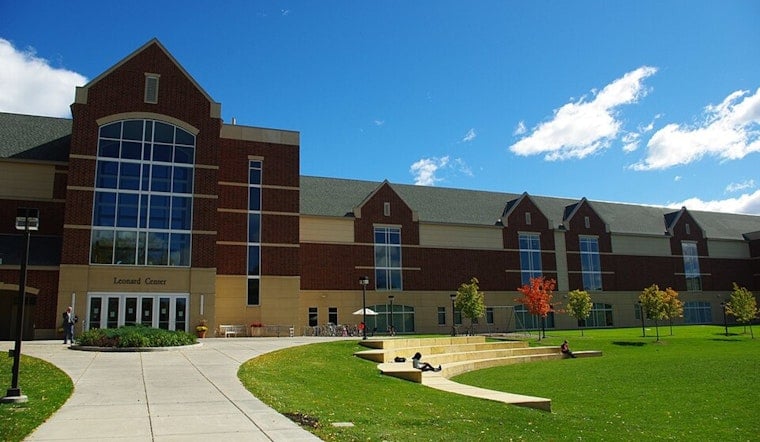
Macalester College is turning a new five-story residence hall into a high-profile experiment in aquifer-enabled geothermal heating and cooling, right at the corner of Grand Avenue and Macalester Street. The building is set to house 224 students, include a welcome center and a public plaza, and is scheduled to open in August 2027. College leaders say it will be the first Macalester building served by a groundwater-based geothermal plant, a system they hope can eventually supply other campus buildings as well.
The college is partnering with Darcy Solutions to install four deep wells that tap groundwater at a steady temperature of about 52 degrees and use sealed heat exchangers to move thermal energy into and out of the building, according to the Star Tribune. Macalester estimates the setup will save about $71,000 a year in energy costs for the new dorm, and notes that the wells occupy almost no surface area compared with traditional ground-loop systems. The project is being framed as a test case for how thermal energy networks might fit into tight urban sites where conventional geothermal would call for dozens of borings and large tracts of open land.
How Darcy’s System Fits A Tight Footprint
The aquifer-enabled approach grew out of University of Minnesota research in the early 2010s and is now commercialized by Darcy Solutions. Instead of laying out sprawling ground loops, Darcy’s design places a sealed heat exchanger directly in a deep well. One such well can deliver the thermal capacity that would otherwise require dozens or even hundreds of boreholes and thousands of square feet at the surface. That compact footprint, Darcy engineers and university researchers say, is what makes geothermal practical for space-constrained campuses, K-12 schools and hospitals that do not have the luxury of open fields.
Carleton’s Campus Playbook
Carleton College in Northfield offers a different model for campus-scale geothermal at larger sites. The school has drilled vertical bore fields to about 520 feet and has been phasing a transition away from steam heating systems toward low-temperature hot-water distribution, according to Carleton College. As new loops and buildings are added, those installations have helped Carleton cut fossil fuel use and reduce overall energy consumption. The Northfield example underscores how design choices such as deep vertical bores, horizontal trenches or hybrids depend heavily on land availability and plans for reusing existing infrastructure.
Money, Policy And The Path Forward
A legislative request filed with the Minnesota Senate shows that Macalester has already put more than $7.1 million into design work, drilling and site preparation, and is asking for roughly $2.57 million from the state’s Renewable Development Account to complete the geothermal plant. The full residence-hall project carries an estimated price tag of about $88 million. College officials told the Star Tribune they plan to finish the building whether or not the grant comes through, which means any funding gap would ultimately land on students. Lawmakers, utilities and regulators are keeping a close eye on pilots like this; if company-owned thermal networks and favorable policies follow, backers say similar systems could move from one-off campus projects to neighborhood-scale infrastructure.
What To Watch
Key checkpoints ahead include drilling permits, legislative votes before the current session ends and any community hearings tied to the project. Macalester and Darcy say the new dorm is meant to function as a visible, working lab for both students and nearby residents. If the system performs as expected, the college aims to extend geothermal service to other buildings north of Grand Avenue, turning the residence hall into a small campus energy hub. For Minnesota, the lessons from Macalester and from larger-land campuses like Carleton could signal a turning point in how cold-climate cities think about the future of heating infrastructure.





