

























































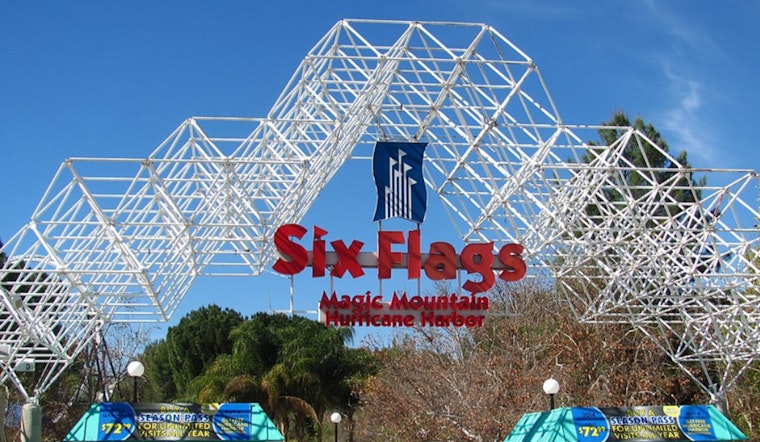
Six Flags Magic Mountain is putting real money on the table to clean up its act along the Santa Clara River, agreeing to sharply cut polluted stormwater leaving its Valencia property and committing $2 million to habitat restoration in the watershed, conservation groups and park officials announced Tuesday. The settlement directs money to on‑park treatment work and downstream restoration that is intended to protect endangered southern California steelhead and groundwater‑dependent cultural resources. About $730,000 from the agreement is earmarked to help unlock roughly $2.1 million in state funding for a Sisar Creek bridge project that backers say would reopen upstream spawning habitat. The announcement follows years of regulatory scrutiny and litigation tied to the park’s stormwater discharges.
What the agreement requires
As reported by MyNewsLA, the deal was rolled out jointly by Six Flags Magic Mountain, Friends of the Santa Clara River, Los Angeles Waterkeeper, and the Wishtoyo Foundation’s Ventura Coastkeeper. Under the written agreement, the park must carry out a suite of stormwater‑treatment projects that the partners describe as "designed to virtually eliminate polluted runoff" from the site and also fund studies and implementation work across the wider watershed. Conservation partners said the package will bankroll on‑site treatment systems, restoration downstream, and studies that support long‑term water resilience and conservation.
Sisar Creek bridge would reopen the steelhead habitat
The settlement steers about $730,000 to the Sisar Creek Bridge Construction Project, money the groups say will help free up roughly $2.1 million in state grant funding. The Sisar Creek project, the participants say, "aims to reopen 6.8 miles of spawning habitat for endangered steelhead," according to the announcement. The California Department of Fish and Wildlife's awards list also shows a Watershed Restoration Grant of roughly $2.1 million to Friends of the Santa Clara River for the Sisar Creek Bridge Construction Project, and regional stream‑passage inventories identify the crossing as a high‑priority barrier to upstream migration.
Legal and regulatory context
Magic Mountain has long operated under federal and state stormwater permits and has faced citizen enforcement actions over its discharges to the Santa Clara River. Court records and the 2015 consent decree from the Wishtoyo/Foundation litigation required the park to either meet numeric effluent limits or install infiltration and treatment measures as part of a settlement framework. The park also runs under an NPDES permit administered by the Los Angeles Regional Water Quality Control Board that specifically lists its outfalls to the Santa Clara River.
Next steps and oversight
Supporters say the announcement kicks off a multi‑phase stretch of design, permitting, monitoring, and construction that will need additional agency approvals and grant administration before major work gets underway. Friends of the Santa Clara River and other partners framed the agreement as a critical infusion of funding and technical muscle that could move priority fish‑passage projects from planning to shovels in the ground. Park officials signaled cooperation with the projects, and conservation partners emphasized that long‑term success will depend on monitoring, enforcement,The and clear performance metrics.





.jpg)