

























































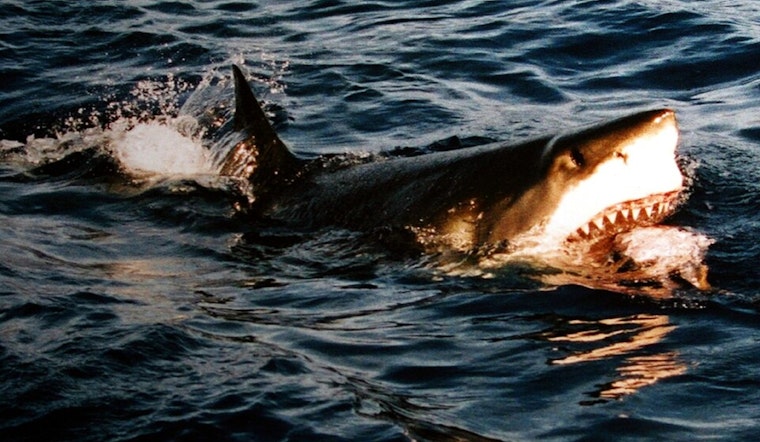
Wildlife filmmaker Carlos Gauna headed out for a routine paddle off Malibu last week and came back with something few people ever get to see: a crystal clear look inside a great white shark’s mouth. A juvenile white shark lunged at an underwater camera trailing behind his kayak, briefly clamping down on the lens before peeling away. Gauna managed to haul the rig back in, rattled but uninjured. Multi-angle footage from cameras mounted on the kayak and an overhead drone captured sharp views of teeth, jaws, and the exact moment of impact.
The encounter did not stay quiet for long. The clip went up on Gauna’s channel and quickly started making the local rounds. As noted by CBS Los Angeles, Gauna, who posts under the moniker The Malibu Artist, shared the video on his YouTube page and on his website through The Malibu Artist.
Inside the chomp
In the footage, Gauna’s onboard audio records his startled shout, “Holy cow, did she bite it?” as he feels the hit from the kayak. A second camera on the kayak and a drone above track the shark’s approach, quick turn, and fast chomp, all captured in the version posted by The Malibu Artist. Gauna told viewers he “felt the tug” when the shark locked onto the rig, and the sequence shows the animal dropping the gear just seconds later. The brief view inside the shark’s mouth is unpolished and close-up, and filmmakers note that shots like that are rarely seen outside controlled laboratory or tagging work.
Camera spared, not unscathed
Gauna said the shark appeared to be a juvenile about 7 to 8 feet long and that the bite cracked the camera’s protective dome, though the full setup made it back to his kayak in one piece. Those specifics were reported by CBS Los Angeles. Other coverage pointed to heavy bait in the water and active sea lions that day, conditions that can pull inquisitive sharks closer to shore, as described by The Inertia. Gauna, who routinely flies drones and tows multiple cameras, called the event unusual and said it strengthened his focus on documenting shark behavior rather than chasing spectacle.
Why SoCal sees juvenile great whites
Researchers say Southern California’s coastline functions as a nursery for young white sharks, drawing juveniles into the same nearshore waters where surfers, swimmers, and paddlers spend their days. A study led by California State University, Long Beach scientists and published in PLOS ONE found that at known aggregation spots, daily human and shark co-occurrence can exceed 97 percent, even as unprovoked bites stay extremely rare. Scientists and local filmmakers say footage like Gauna’s helps them map out when and why sharks cruise near busy beaches without necessarily increasing the risk to people in the water.
Gauna has been supplying aerial and underwater clips to researchers for years, and his drone video was used in documenting what some scientists suggested could be a newborn great white, a sighting that drew scientific attention in 2024. As detailed by the University of California, Gauna has worked alongside shark researchers and says he wants his videos to support conservation and science, not hype. Experts say that more observations from careful operators like Gauna can translate into stronger data on shark movements and, ultimately, safer beaches for humans and wildlife.
No one was injured in the Malibu incident, and Gauna framed the clip as a rare educational look at an apex predator rather than a sign of some new threat lurking offshore. White sharks are protected in California, and recent policy changes seek to cut down on harmful encounters while keeping those protections in place, including the California Department of Fish and Wildlife’s summary of safeguards and 2022 updates to white shark rules. As summer ramps up and local officials and regular ocean users look ahead to crowded lineups and busy beaches, experts are again stressing respect for the animals and basic ocean safety whenever people and sharks end up sharing the same stretch of water.





