

























































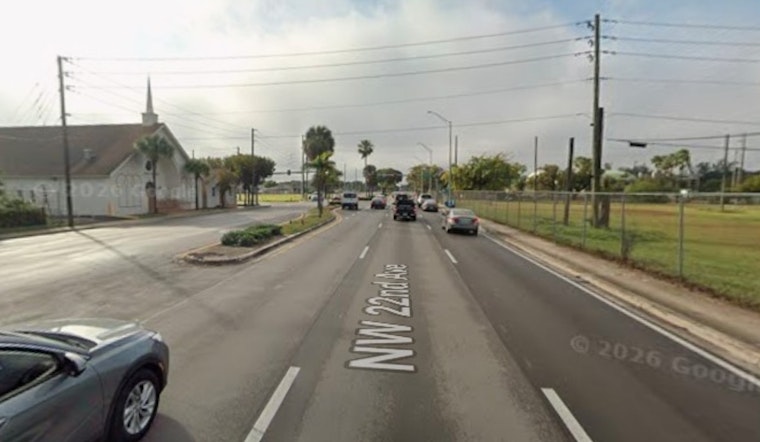
Developers on Thursday filed a pre-application to rezone a 13.77-acre county-owned parcel at 7200 NW 22nd Avenue in Gladeview, setting the stage for a logistics center alongside the first wave of housing in the larger Poinciana plan. The Phase 1 concept ties an approximately 251,000-square-foot warehouse to 155 affordable senior apartments, an expanded community health clinic and new retail. Backers say the industrial piece is meant to help pay for later mixed-income housing phases and to support a permanent training program for local residents.
Poinciana Phase 1 Details
According to Florida YIMBY, the pre-application asks for industrial zoning on the full 13.77-acre site and outlines a 251,000-square-foot warehouse tied to MedLog, the logistics arm of Mediterranean Shipping Company, alongside 155 senior units reserved for households earning up to 60 percent of area median income. The filing also cites roughly 300 projected jobs and a permanent training program aimed at recruiting future residents and nearby neighbors. Phase 1 calls for expanding the Frederica Wilson Community Health Center and adding more retail space on-site.
County Record Shows Agency Role
Miami-Dade has already taken steps toward a public-private deal for the Poinciana properties, directing county staff to fast-track due diligence and launch a HUD disposition process for county-owned lots that include 7200 NW 22nd Avenue, according to Miami-Dade County records. Those documents specifically name MedLog and Mediterranean Shipping Company as partners on the industrial portion and call for appraisals, title work and environmental reviews before any land is conveyed. The new pre-application now moves forward against that backdrop of county negotiations and prior board action.
Who's Behind The Proposal
Public filings link SG Poinciana Ventures to a partnership led by Michael Swerdlow with Stephen Garchik of SJM Partners and Alben Duffie, a team that has pitched a roughly $295 million, three-phase redevelopment. Reporting by The Real Deal outlines the broader vision, which the developers say would deliver hundreds of affordable and mixed-income units along with industrial and retail space. Arquitectonica appears as the project’s designer in developer materials, and the group has proposed purchase terms that account for cleanup costs tied to the long-vacant site.
Long-Vacant Site, Longstanding Tensions
Neighbors and advocates have watched the Poinciana parcels sit empty and deteriorate for years, and earlier attempts to revive the site triggered political battles over local hiring, community benefits and who should control the project. The troubled history and competing proposals have been detailed by The Miami Herald, which points to illegal dumping and lengthy delays in getting redevelopment off the ground. Those long-running frustrations are expected to loom large when the rezoning request hits public hearings.
Developers emphasize that the logistics center is pitched as a way to support future housing rather than displace it, and the filing again highlights an estimated 300 jobs plus an on-site training program focused on recruiting people from the surrounding community. According to Florida YIMBY, later phases would add about 110,000 square feet of small-bay industrial space in Phase 2 and a hospitality training center in Phase 3. Even so, truck routes, traffic impacts and environmental cleanup are poised to be front-and-center issues for planners and neighbors alike.
What’s Next
The county’s pre-application review is only an early step and does not by itself grant new zoning. Formal rezoning applications, public hearings and staff recommendations typically follow before any changes to zoning or land ownership are approved. Miami-Dade records indicate the administration plans to conduct HUD reviews, appraisals and environmental due diligence and to negotiate development agreements if the proposal keeps moving forward.
For a neighborhood that has waited decades for meaningful investment, the Poinciana filing will test whether promises of jobs, training and affordable homes can outweigh anxiety about industrial neighbors. Upcoming county calendars and additional developer filings will show when residents get their turn at the mic and when the next formal decisions land.





