

























































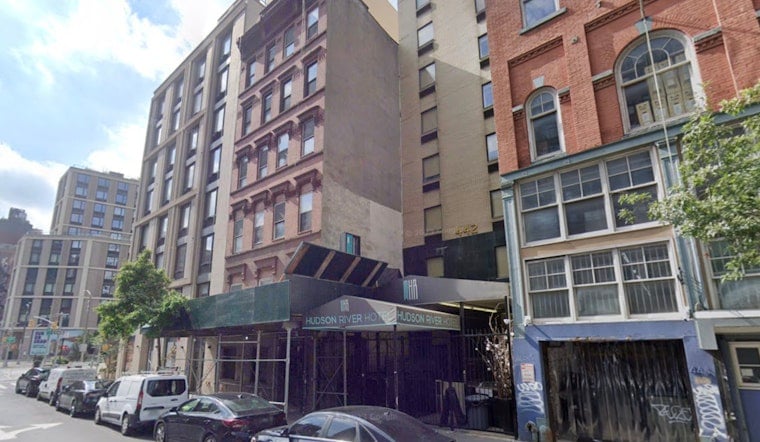
A small Hudson Yards hotel that the city recently turned into a behavioral health shelter is now caught in a high-stakes standoff between its owner and its lender, with foreclosure looming in the background. The Hudson River Hotel at 442 West 36th Street, now home to a "Bridge to Home" transitional behavioral health program, has become the flashpoint in a fight over how the building is allowed to be used. Neighborhood leaders and city officials are keeping a close eye on what happens next.
As reported by Crain's New York Business, the mortgage holder has moved to enforce the loan after the owner leased the property to NYC Health + Hospitals, arguing that the conversion to a long-term city program may violate mortgage covenants and damage the value of the creditor's stake. According to the outlet, the move could lead to a judicial foreclosure if the parties fail to hammer out an agreement.
City lease and program details
The city announced in September 2025 that NYC Health + Hospitals had entered into a three-year net lease for the Hudson River Hotel in order to operate its "Bridge to Home" transitional facility, which provides onsite clinical services and housing for people with severe mental illness, according to the Mayor's Office. At full capacity, the site offers single rooms for up to 46 guests and was approved by the H+H board as a clinical discharge pathway. City officials have framed the program as a tool to cut hospital readmissions and help participants move toward permanent housing.
Local response
Manhattan Community Board 4 reviewed the project before it opened and gave it conditional support, while pressing for gradual admissions, better lighting and trash management, and monthly community advisory meetings, according to Manhattan Community Board 4's letter. The board also pointed to an existing cluster of social service sites on the block and requested more advance notice as the program scales up. The conditions highlight a mix of support for the program's mission and unease about its impact on an already heavily burdened stretch of West 36th Street.
Owner and recent history
Public property records and local reporting show that the building changed hands in June 2024, when Hudson West Hospitality LLC bought it for roughly $18.2 million and it continued to be marketed as the Hudson River Hotel prior to the H+H lease, per PincusCo. Property databases list the structure's size and tax history, details that help explain why lenders and buyers have traditionally treated the asset as a hotel instead of an institutional facility; see public filings for the parcel on PropertyShark. The timing of the sale followed by a long-term city lease sits at the heart of the lender's challenge.
Legal fallout and process
In New York, foreclosure is a court-supervised process that usually starts with a lawsuit and can take many months to wind through the system, which gives both sides room to either negotiate or square off in litigation, according to the state courts' foreclosure guidance. Mortgage agreements often include covenants that restrict major changes in use or long-term leases without lender sign-off. When lenders believe those covenants have been broken, they can move to accelerate the loan or push for a sale, remedies that are typically laid out in the loan documents and related legal filings.
What to watch next
Key signs to watch include the filing of a lis pendens or other formal court papers that would mark the official start of a foreclosure case, any public statements from the lender or the owner, and whether the city takes steps to protect the Bridge to Home lease while the dispute plays out. If a foreclosure proceeds, it could disrupt continuity of care at the site and force the city to either relocate patients or rework terms with whoever controls the debt.
The clash underscores how New York City's push to reuse private hotels for public health and housing programs can run headfirst into lenders' efforts to protect their collateral. For Midtown West residents, advocates, and officials, what happens at 442 West 36th Street will be a closely watched test case.



