

























































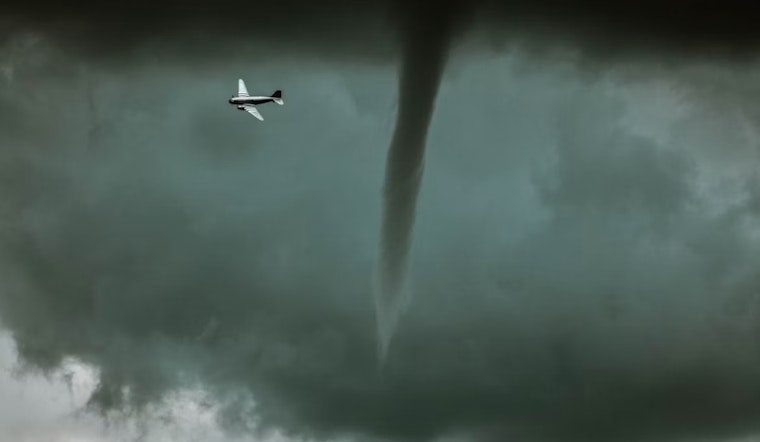
Folks around tiny Waters in southern Otsego County got an up-close look at severe weather earlier this week when a brief tornadic waterspout, later rated EF‑0, spun across Big Bradford Lake, grazed the eastern shore, and snapped small branches. The National Weather Service confirmed the short-lived twister and noted it added to an already active 2026 tornado season in Michigan. Early accounts indicate damage was limited, with no reports of major structural damage.
The NWS classified the event as an EF‑0 tornadic waterspout that lasted about one minute, produced estimated peak winds near 65 mph, tracked roughly 0.1 mile, and measured about 20 yards across. The waterspout clipped the lake's eastern shoreline and caused mostly minor damage to tree branches and free-standing objects, according to CBS Detroit.
What Is A Tornadic Waterspout?
Tornadic waterspouts form from rotating thunderstorms and behave like short-lived tornadoes over water, while fair-weather waterspouts arise over warm water and tend to be weaker. The NWS Gaylord office explains the difference and notes waterspouts usually last only minutes but can be dangerous to boaters and shoreline residents. "Take waterspouts seriously," the agency advises, NWS Gaylord.
How This Fits Into Michigan's 2026 Season
As of yesterday, Michigan had 16 confirmed tornadoes for the year, a count that reaches or exceeds the state's long-term annual average. Nine of those were produced during severe storms on April 15, a stretch that helped push this season's tally higher, according to CBS Detroit. Local meteorologists told FOX 2 Detroit that peak tornado months are still to come, and residents should keep an eye on forecasts.
The NWS asks boaters to head to a safe harbor and advises shoreline residents to seek sturdy shelter if a waterspout moves onshore. For more on formation and safety steps, see the NWS Gaylord waterspout guidance at NWS Gaylord. Those with footage or damage to report are encouraged to contact local emergency management so officials can complete surveys and clear hazards.




