

























































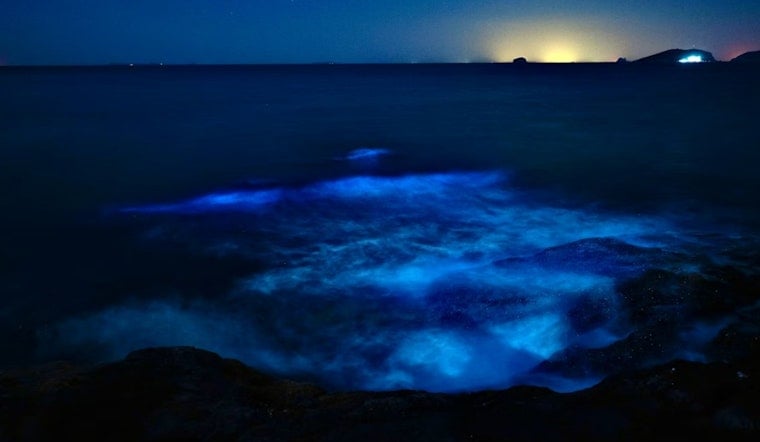
Over the weekend, Point Reyes National Seashore served up an ocean scene that looked straight out of a sci‑fi movie. Waves rolled in tinted a deep purple, and the shoreline filled with translucent, jelly‑like critters riding the violet surf. Social media lit up with photos and theories, but scientists and park staff are clear on one thing: this is almost certainly a natural phenomenon, not a prank involving dye.
Not dye — a bloom of microscopic plants
The unusual color is tied to phytoplankton, microscopic single‑celled plants that can literally change the look of the ocean when they explode in number. According to California Sea Grant, when millions of these cells gather near the surface, their pigments and the angle of the sun can make the water appear red, purple, brown, green or even yellow. These blooms occur naturally and are a familiar seasonal sight along stretches of the California coast.
Why blooms happen and when they're seen
NASA notes that phytoplankton populations can "grow explosively" when sunlight, warm surface waters and nutrients all show up at the same time. Some of these species can produce powerful biotoxins linked to what people commonly call red tides. Researchers at Scripps Institution of Oceanography report that blooms in California are most often spotted from early spring through late summer, when winds, upwelling and calmer seas combine to create ideal conditions. Scientists rely on satellite images and coastal water sampling to identify which species are present before any health advisories are issued.
Those jelly‑like blobs were salps, not jellyfish
Local photos picked up by regional feeds, and highlighted by the Sacramento Bee, showed juvenile salps drifting in the purple surf at Point Reyes. Salps are barrel‑shaped, transparent tunicates that feed by filtering phytoplankton and can rapidly clone themselves into long chains that sometimes wash ashore, according to the Catalina Island Marine Institute. Unlike jellyfish, they do not sting, but their appearance often signals that plankton levels in the water are high.
When the color can mean danger
Not every oddly colored patch of water is a crisis, although some phytoplankton species do produce toxins that can make people and wildlife sick and can be deadly for pets. The Centers for Disease Control and Prevention advises staying out of scummy or discolored water, skipping shellfish from areas with active blooms, and calling Poison Control at 1‑800‑222‑1222 if you think you have been exposed.
What locals should do
If you come across strange water color or dead marine life, note the exact location, take photos if it is safe to do so, and report what you saw to Point Reyes rangers or your county health department. Park contact information is available from the National Park Service. For background and current bulletins on coastal blooms, California Sea Grant and regional ocean‑observing groups publish maps and advisories that help residents and visitors decide whether it is safe to spend time in or near the water.



