

























































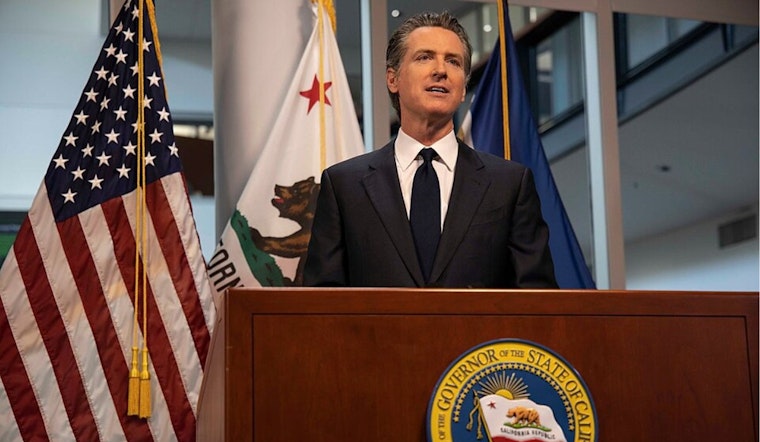
California came close to yanking most PFAS-laced nonstick cookware off store shelves, only to watch the effort fizzle when Gov. Gavin Newsom sent the bill back without his signature. The result was a very public fight pitting environmental advocates against cookware makers and celebrity chefs, who argued that a rapid phase-out would leave home cooks with fewer nonstick options and higher prices. For now, PTFE-coated nonstick pans remain legal in the state, and the larger clash over PFAS pollution and consumer safety is still simmering.
What the bill would have done
Senate Bill 682, authored by Sen. Ben Allen, cleared the Legislature in September 2025 and targeted products that contain “intentionally added” PFAS. The measure called for a phased ban on a wide range of consumer goods, from food packaging and cleaning products to juvenile items, with most categories restricted by 2028 and cookware barred by 2030, according to California Legislative Information.
Newsom's veto and the affordability argument
Gov. Gavin Newsom returned the bill without his signature in October 2025, saying in a message to lawmakers that he was deeply concerned about the impact this bill would have on the availability of affordable options in cooking products. He warned that a rapid market shift could shrink low-cost options for consumers and complicate distribution for retailers and ports, and he urged caution about timing and implementation. Those concerns are spelled out in the veto message released by the Office of the Governor.
Industry and kitchen heavyweights push back
Cookware companies and several star chefs mounted a hard push against the proposed ban, arguing that modern PTFE-based nonstick pans are safe when used correctly and remain a staple in many home and professional kitchens. High-profile food figures, including Rachael Ray, David Chang and Thomas Keller, publicly criticized the bill, noting that their branded cookware lines rely on PTFE coatings, as reported by The Sacramento Bee. Trade groups also warned lawmakers that, because of California’s ports and distribution networks, the state functions as a major domestic hub for cookware sales, a point highlighted by the Los Angeles Times.
What the science says
PFAS make up a broad and chemically varied family of compounds, and catalogs used by regulators and researchers list more than 14,000 related structures, with only a fraction studied in depth, according to Nature Geoscience. Laboratory work has found that PTFE-coated cookware can release microplastic and nanoplastic fragments when the coating is scratched or otherwise damaged. A 2024 experimental study that simulated cooking and food contact measured PTFE and other microplastic particles leaching into a food simulant, as detailed in research in Science of the Total Environment. At the same time, regulators still permit PTFE in food-contact applications and state that intact PTFE coatings used at normal household temperatures are generally considered safe under existing food-contact regulations, as per provisions in the eCFR.
Where the fight goes next
Environmental and public health advocates say the veto is a setback, not the end of the campaign. States introduced roughly 350 PFAS-related bills in 2025 as lawmakers took targeted runs at certain product categories, according to tracking by MultiState. After Newsom’s decision, environmental groups blasted the move as harmful to public health. The Environmental Working Group said the veto delays protections for millions of Californians and vowed to continue pushing for new restrictions.
What it means for people in California
For everyday cooks, the veto means nonstick pans stay on store shelves while the real battle continues in legislative hearing rooms, regulatory dockets and research labs. Debates are increasingly shifting toward how much of the PFAS problem should be tackled at the factory gate instead of at the family stovetop. “We can turn off the tap on this problem,” Harvard environmental chemist Elsie M. Sunderland said about cutting industrial PFAS sources, as reported by the Sacramento Bee.





