

























































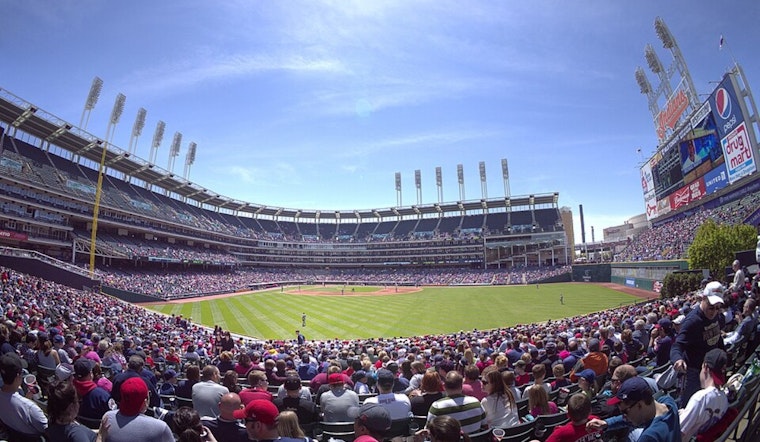
Ohio House Speaker Matt Huffman has slammed the brakes on Cuyahoga County’s push to hike its so-called sin tax, cutting off what local officials had billed as the quickest way to refill dwindling stadium-repair coffers. After months of behind-the-scenes planning, Huffman told county and team representatives on Wednesday that lawmakers will not move this year, keeping a proposed ballot question off the schedule and forcing county leaders back to the drawing board as they try to fund fixes at Progressive Field, Rocket Mortgage FieldHouse and other Gateway properties.
Cuyahoga County officials, joined by representatives from the Cavaliers, Guardians and Browns, headed to Columbus to lobby Huffman, Gov. Mike DeWine and Senate President Rob McColley for permission to ask voters to potentially triple or even quadruple current alcohol and cigarette excise rates. Huffman later told reporters he worried that steeper taxes would backfire by pushing shoppers into neighboring counties for cheaper beer and cigarettes, and he made clear the Statehouse will not act this year, as reported by Cleveland.com.
What the sin tax pays for
The county’s sin tax is dedicated to the Gateway complex that hosts the Cavaliers, Guardians and Browns, and it serves as the main public funding stream for capital repairs and some debt payments on those facilities. The Cavs and Guardians have already applied for more than $100 million in state grants drawn from Ohio’s unclaimed-funds program to cover major projects, per Axios Cleveland, while local reporting has detailed how Gateway has been postponing work and dipping into reserves to get by. County leaders say those gaps are what make a potential tax increase feel urgent.
Rates, revenue and the math
Right now, Cuyahoga County collects only pennies at a time: about $0.16 per gallon of beer, $3.00 per gallon of liquor and roughly $0.045 per pack of cigarettes, according to the County Commissioners Association of Ohio. All told, those per-unit charges generate in the neighborhood of $13 million to $14 million annually, a figure county officials say does not come close to covering Gateway’s repair backlog, per Community Solutions. Policymakers have also kicked around the idea of shifting to a price-based tax so revenue rises with inflation instead of being tied strictly to volume.
How much a hike would bite — and what it wouldn’t
Cuyahoga County Executive Chris Ronayne has described a possible fourfold increase in the excise rates as an “inflationary adjustment,” arguing it could pull in about $56 million a year while only nudging retail prices: roughly 27 cents more for a six-pack of beer, $1.78 extra on a 750-milliliter bottle of liquor and about 14 cents more per pack of cigarettes. Supporters say that kind of bump would let Gateway tackle overdue maintenance, while critics counter that big jumps in excise taxes are regressive and could send cost-conscious buyers to surrounding counties. Those estimates and reactions were reported by Cleveland.com.
What’s next
Because state lawmakers must sign off before a countywide tax change can go to the ballot, Huffman’s refusal effectively sidelines the sin-tax strategy for 2026 unless the legislature reverses course. Any change would still have to run through state law, as outlined in the Legislative Service Commission’s analysis of HB 96. In the meantime, Ohio officials are expected to announce the winners of the unclaimed-funds stadium grant program this summer, per Axios Cleveland. Adding to the pressure, Cuyahoga County is already juggling major commitments, including plans to issue nearly $1 billion in bonds for a new jail, which limits how much more the local budget can absorb, according to Ideastream Public Media.
Spokespeople for the county and the teams say long-term talks about funding and planning are still underway, even with the sin-tax route blocked for now. With repair bills piling up and few fresh options in sight, local leaders may eventually circle back to the Statehouse or lean harder on grants, special-district concepts and new borrowing to keep the stadiums functional and safe. For the moment, Huffman’s decision draws a hard line around what the legislature will consider this year and leaves county officials to sort through some politically tough choices ahead of fall budget season.



