

























































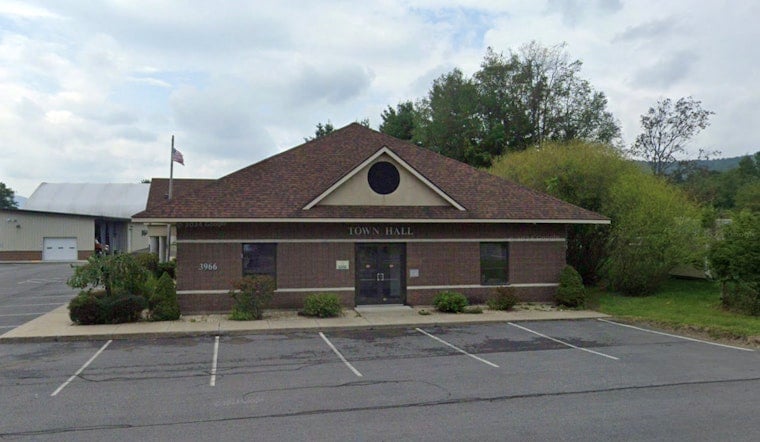
Oneonta’s town board has slammed the brakes on new data-center proposals, voting this month for a 12‑month moratorium after months of vocal opposition to a planned facility just outside town. Local officials say the yearlong pause is meant to give them time to dig into zoning rules, utility impacts, and whether data centers actually deliver durable jobs for residents. During the moratorium, the board plans to draft a local law and hold more public hearings before any similar projects get a green light.
As reported by WBNG, the unanimous vote capped a long-running fight over an application from Eco‑Yotta for a Planned Development District at 357 County Road 9. Residents say the parcel had been used as farm land and youth soccer fields until the company purchased it in January 2025. Town Supervisor Will Rivera told the station that roughly 700 residents signed a petition against the proposal and that the board heard from "over 700 of our constituents" who did not want such facilities. Board members told WBNG they opted for a cautious moratorium instead of rushing through an outright ban so they can update the town’s comprehensive plan and zoning code.
Town records show zoning questions, committees and hearings
Town documents and meeting minutes posted online show that the Eco‑Yotta Planned Development District application - listed in filings as 357 County Highway 9 - triggered detailed committee reviews over the winter and multiple public hearings. The official Town of Oneonta board page and minutes note that members raised technical questions about projected energy use, the undefined term "agri‑business" in the local code, and whether utility provider NYSEG had been asked to model system impacts. Those public records underscore that the moratorium is intended to give the board breathing room to update local law rather than to permanently block every form of technology investment.
Albany weighs a three‑year statewide pause
Oneonta’s move is unfolding in parallel with a broader fight in Albany, where state lawmakers have introduced S.9144/A.10141 - a proposal for a three‑year statewide moratorium on new hyperscale data-center permits while regulators study cumulative effects on energy, water and waste. The measure, led by Sen. Liz Krueger and backed by sponsors including Sen. Kristen Gonzalez, would require state agencies to complete environmental and rate-impact studies before new hyperscale projects advance, according to the New York State Senate.
Experts and tech voices push different frames
Data centers serve as the physical backbone of cloud and AI services and require large, continuous amounts of power and cooling - the kind of capacity described in IBM's primer on hyperscale facilities. Ke Xu, an assistant professor at RIT who studies energy‑efficient edge AI, told Spectrum News that data centers can support a range of ongoing jobs, from operations and networking to cybersecurity. Xu also explained that edge computing can complement larger facilities by handling low‑power, localized tasks. The Xu Group at RIT focuses on low‑power edge AI hardware, work that he and other researchers say could relieve some demand pressures even as hyperscale data centers remain necessary for major AI workloads.
Energy math and the political fight
Advocates pushing for a pause argue that clusters of new data centers could add gigawatts of demand to New York’s grid and shift costs onto everyday ratepayers, a warning highlighted by groups such as Food & Water Watch. The numbers behind those arguments are complicated: a recent fact-check found the widely cited 9.5‑gigawatt figure for proposed projects is both real and alarming, but how it compares to household electricity use depends on whether analysts look at average versus peak loads - a key distinction for grid planners, according to PolitiFact.
What’s next for Oneonta
The town’s 12‑month moratorium took effect immediately and gives officials a year to request additional studies from utilities, hold more public hearings and draft new zoning language before any Planned Development District rezoning can move forward, as reflected on the town’s meeting calendar and filings. Town leaders have said the pause is not necessarily intended to be permanent, but instead will be used to update the comprehensive plan and craft rules they believe will better protect residents and local resources. Nearby municipalities and state lawmakers will be watching to see whether Oneonta’s approach nudges the debate toward local moratoriums, a broader state pause, or some other mix of regulations to manage AI-related growth.
For now, Oneonta’s decision has dropped the town squarely into a statewide conversation about how to balance local control, grid reliability and the economics of hosting AI infrastructure. As the fight in Albany plays out, small communities like Oneonta may wind up writing the unofficial rulebook for where and how the next wave of data centers gets built.




