

























































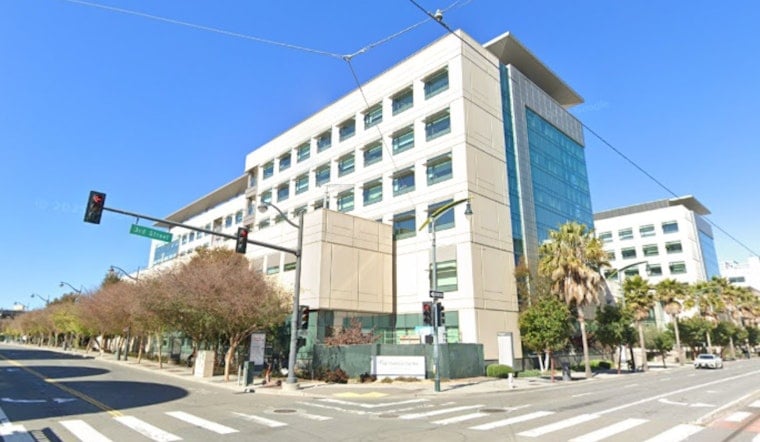
Laboring patients diverted to unfamiliar hospitals, planned C-sections pushed back for hours and nurses grinding through 12- to 16-hour shifts with barely a break: that is how UCSF Mission Bay Birth Center nurses describe life on their floor, which they say is chronically understaffed and short on hands-on training.
According to bedside staff, the Birth Center often absorbs complex patient transfers that demand extra time, experience and specialized education. Nurses say that mix, combined with thin staffing, leaves patients at risk. Yesterday, dozens of staffers gathered outside the Mission Bay hospital to publicly press UCSF leadership for more hires, stronger education and steadier front-line management.
As reported by The San Francisco Standard, the Birth Center delivers about 2,500 babies a year. Nurses told the paper that triage call buttons are sometimes left blinking, labor rooms are at times short a nurse and some patients have been asked to head to hospitals they have never used before. The Standard also noted that nurses passed a no-confidence vote in the unit’s former nursing director in January and that leadership turnover left the floor without consistent direction for months.
Staffers told the outlet there is just one nurse educator for roughly 180 nurses, a ratio they say limits accessible, bedside training for complex situations such as sickle-cell pain crises or severe peripartum mental-health needs.
Rally And Union Push
In a press release published by the California Nurses Association on the National Nurses United site, registered nurses said they staged a May 1 rally at UCSF Mission Bay to demand immediate hiring, better training and safer staffing plans. The union said organizers circulated a sample letter that community members could send to hospital executives and spotlighted examples where night-shift nurses were forced to stay on for four extra hours or called back in on their days off.
Union leaders framed the rally as a push to protect patients and to get UCSF to lean more on real-time, bedside education instead of video trainings that arrive after the fact. The message from nurses, according to the union, is that staffing fixes need to show up in the room, not just on a policy sheet.
State Rules And Local Capacity
UCSF’s own patient information lists the Birth Center at Mission Bay at 1855 4th Street on the third floor and describes its obstetrics and midwifery services, per UCSF Health. California law sets baseline nurse-to-patient minimums for labor and delivery units, and state code spells out those regulatory floors, according to California law.
Nurses and union advocates say those minimums do not always reflect the extra time, coordination and specialized skills required for higher-acuity mother-baby care at a tertiary center like UCSF, where more complex pregnancies and deliveries often land.
Staffers Point To Training And Leadership Gaps
"After working 15 hours, our 'cup is empty,'" Claire Zukin, a Birth Center nurse, told The San Francisco Standard, describing how exhaustion can erode a nurse’s ability to keep up the close monitoring patients expect.
Nurses also told the paper that metal detectors were delivered to the unit’s lobby but had not yet been set up, and that the hospital has launched a national search for a permanent director after a string of interim leaders. UCSF, quoted in The Standard, said it is recruiting additional nurses and supplementing shifts with traveling staff. Bedside nurses counter that temporary hires and remote training do not fix immediate gaps in on-the-floor education and front-line leadership.
What Comes Next
The union release says nurses and allied groups plan to continue public actions and community outreach while watching staffing levels and safety conditions. The CNA and NNU posting includes a sample letter and urges community members to weigh in directly with hospital management.
If staffing problems continue, patients and advocates can raise concerns with state regulators under existing hospital staffing rules. For people planning births at UCSF, advocates recommend confirming scheduling details with the Birth Center and talking through backup plans with clinicians well ahead of delivery dates.




