

























































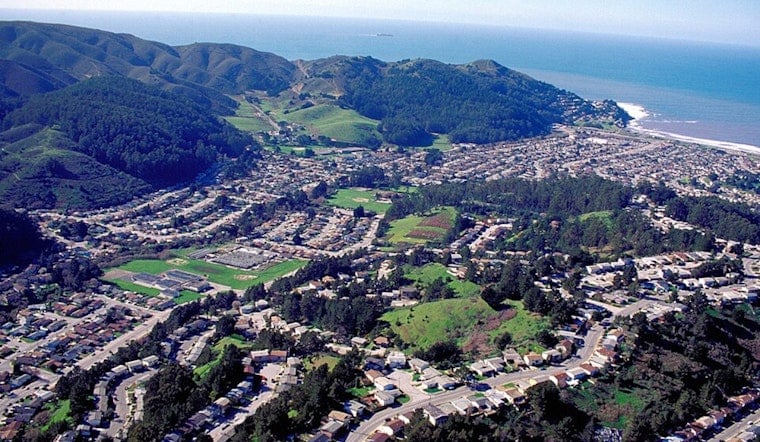
Pacifica just landed dead last in a national list of small cities to start a business, but on the ground, the coastal town feels a lot less doomed than the headline suggests. Along the waterfront, shoreline cafes, surf shops and family-run restaurants still anchor the local economy. Owners say the ranking is more of a quirky talking point than a five-alarm emergency, and for many residents it has sparked debate rather than panic.
WalletHub compared 1,334 cities with populations between 25,000 and 100,000, scoring them across three categories: business environment, access to resources and business costs. According to WalletHub, the report leans on 18 metrics, from startups per capita to office-space affordability and access to capital, a formula that tends to reward lower-cost inland communities.
Locals say the ranking misses the town's strengths
Business owners and community leaders told CBS News Bay Area that the "worst" label felt too narrow for a place like Pacifica. Robby Bancroft, who opened The Shore Shack five months ago and was named the San Francisco district's Small Businessperson of the Year, described the city as somewhat "cut off" for classic high-growth startups, but said it is "almost the best" spot for a neighborhood restaurant. Archie Judan, president of the Pacifica Chamber of Commerce, noted that the city has about 3,000 active businesses and that many of them are geared toward visitors, not rapid-scaling firms chasing investors.
City leaders point to a local economic plan
The City Manager's Office recently approved an Economic Development Workplan that focuses on supporting and retaining small businesses and making planning and permitting easier to navigate, according to the City of Pacifica. In a joint statement reported by CBS News Bay Area, interim City Manager Yulia Carter and Economic & Housing Manager Gretchen Heckman said rankings like WalletHub's do not fully reflect the local mix of conditions that shape business success. Councilmember Mary Bier also pointed out that sea-level rise, erosion and state regulatory oversight make local planning and growth especially complicated.
Why Pacifica scored poorly, and what that means
WalletHub's formula places heavy weight on costs and investor access, factors that usually boost inland cities and push expensive coastal towns toward the bottom of the list. Regional coverage noted that several Peninsula and East Bay communities also clustered near the bottom of WalletHub's small-city rankings, reflecting those same cost-and-access pressures. In its own write-up, WalletHub and its expert commentators caution that lists like this are snapshots and should be viewed alongside local data on tourism, seasonality and environmental constraints.
For now, Pacifica business owners are treating the ranking as an odd bit of spotlight rather than a final verdict. Some hope the publicity nudges more visitors to swing through, while the Chamber and city economic staff say they are working to connect entrepreneurs with available resources and clarify the permitting path. Those looking to get started locally can begin with the city's economic development page and the Pacifica Chamber of Commerce.




