

























































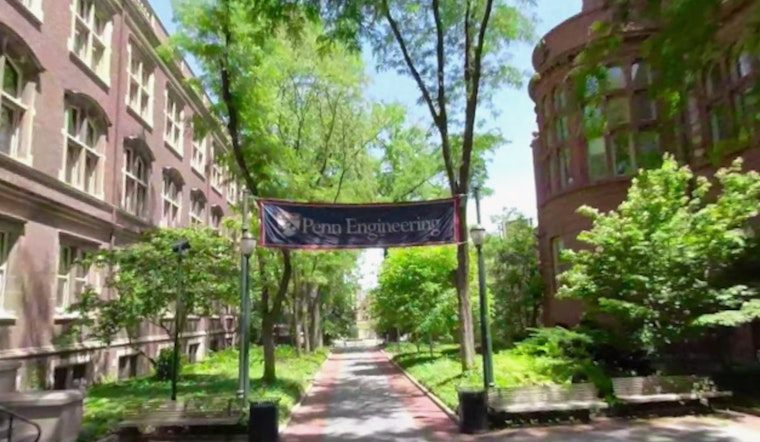
In a Penn Engineering lab, researchers have sharpened a quick, microscope-friendly staining method that makes tiny plastic bits light up, and they are now eyeing a low-cost kit that schools and neighborhood groups could use. In test runs, the team has made microplastic fragments from city creeks and household drinking sources fluoresce, creating stark visuals that they hope will make the scale of contamination easier to grasp. The timing lines up with a growing federal push to measure and understand microplastics in drinking water and the human body.
Postdoctoral researcher Derek Ho uses the lipophilic dye Nile Red with an acetone-assisted protocol to make plastics glow, while Assistant Professor Samantha McBride says she and her colleagues have spent about two years fine-tuning the staining process to boost visibility and throughput, as reported by 6ABC. For comparison, the team brought in bottled and canned water and also processed an environmental sample from Cobbs Creek to show how the stained particles pop under specialized lighting. McBride told reporters that the long-term goal is a simpler screening tool that schools and local organizations could use to test water and teach students about where microplastic contamination comes from.
Federal Push Brings Funding And Scrutiny
In early April the Department of Health and Human Services announced an ARPA-H program called STOMP, short for Systematic Targeting Of MicroPlastics, backed by $144 million to develop ways to measure and remove micro- and nanoplastics from the human body, according to a press release from HHS. At the same event, the EPA rolled out its draft Sixth Contaminant Candidate List, which elevates microplastics as a priority contaminant group for drinking-water research and opens a public comment period, as outlined by ASDWA. The new attention at the federal level points to more grant funding and, over time, standardized monitoring methods, which is the gap the Penn team is aiming to help close.
How The Stain Works And Its Limits
Nile Red is a solvatochromic, fat-loving dye that tends to latch onto hydrophobic plastic fragments and makes them fluoresce, which speeds up visual screening compared with checking every particle by spectroscopy. Reviewers caution, though, that fluorescence on its own can trigger false positives, since organic matter or other particles can also light up, and that spectroscopic tools such as FTIR or Raman are still considered the gold standard for confirming polymer types, according to a recent review in the Microchemical Journal.
Local Testing, Schools And Community Stakes
Penn’s work folds into a broader effort to track emerging contaminants in the city. The university’s Philly Emerging Water Contaminants Initiative identifies microplastics as a research priority and connects faculty, students and community partners with local sampling programs, according to Penn Environment. The Philadelphia Water Department notes that its labs have been monitoring microplastics in local rivers and are developing outreach materials and school curricula on the issue, underscoring the local appetite for hands-on testing and education. For residents along Cobbs Creek, where lab samples have already been collected, that could mean students and community groups learning how to spot particles under a microscope and talking through what the findings might mean for everyday choices, such as bottled versus tap water.
Researchers say the immediate aim is better data, not panic. Penn is applying for federal research funding linked to the new national programs so they can scale up the method and field-test simplified kits, and they emphasize that fluorescence screening would serve as an entry-level step ahead of laboratory confirmation, as 6ABC reported. If the approach proves reliable, it could give schools and community labs a quicker way to map where microplastics show up and a stronger footing for pushing city and federal agencies on exposure and regulation.





