

























































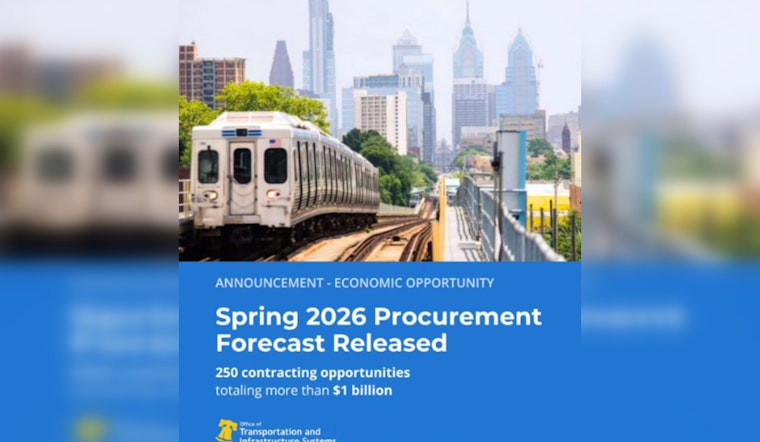
Philadelphia just rolled out its Spring 2026 procurement forecast, and it reads like a billion-dollar roadmap for the city’s next wave of public works. The Infrastructure Solutions Team’s latest release flags roughly 250 contracting opportunities and about $1 billion in anticipated public-works investments across a dozen departments. The semiannual update is meant to give contractors, especially small and historically underutilized businesses, a clearer heads-up on upcoming bids for streets, airport, water, and other infrastructure projects. City officials say the goal is to widen the pool of local firms that can go after big-ticket work and to better line up federal and local funding streams. This edition continues the IST’s effort to turn Bipartisan Infrastructure Law dollars into visible jobs and contracts around Philadelphia.
Per the Office of Transportation and Infrastructure Systems Facebook post, the Spring 2026 edition covers 12 departments and roughly 250 contracting opportunities and links to a blog with the full forecast. The post also notes that the forecast anticipates approximately $1,000,000,000 in upcoming infrastructure investments across the listed projects.
The Infrastructure Solutions Team, housed within the city’s Office of Transportation and Infrastructure Systems, has published semiannual procurement forecasts since 2023 to give businesses earlier notice of forthcoming work, according to the city’s Office of Transportation and Infrastructure Systems. The Spring 2025 update, for instance, listed roughly 130 contracting opportunities that represented about $360 million in anticipated work.
What The Forecast Includes
The Spring 2026 forecast pulls together both public-works and professional-services solicitations, covering everything from resurfacing and bridge rehabilitation to airport terminal improvements and on-call service contracts. It also highlights potential subcontracting roles and estimated cost bands. The city’s post points to 12 participating departments and agencies that will be issuing bids over the coming 18 to 24 months, giving firms an early look at where demand is likely to be concentrated. For many smaller contractors, that kind of lead time can be the difference between sitting out and lining up bonding, staffing, and equipment in time to compete.
How Local Firms Can Prepare
The city pairs the forecast with programs aimed at boosting participation by historically underutilized businesses, including advisory and matchmaking services through SupplyPHL and financial and risk-reduction pilots outlined in the IST’s report and action plan. These tools, from a proposed Capital Access Fund to owner-controlled insurance pilots, are intended to lower upfront barriers such as mobilization capital, insurance, and bonding that often keep local firms off bids. See the IST Report and Action Plan and SupplyPHL for program details and sign-up information: IST Report and Action Plan and SupplyPHL.
Practical next steps for contractors stay pretty straightforward: register with SupplyPHL, review the forecast’s downloadable list, and start lining up any required bonding, insurance, and subcontract partners before opportunities open. City procurement platforms and partner organizations also offer workshops and technical assistance aimed at making bids more competitive for local and diverse firms.
The full Spring 2026 Procurement Forecast is linked from the Office of Transportation and Infrastructure Systems post and is available through the city’s procurement resources. Prospective bidders should keep an eye on the city’s calendar for specific let dates and pre-bid meetings. This story will be updated as notable solicitations and outreach events are announced.





