

























































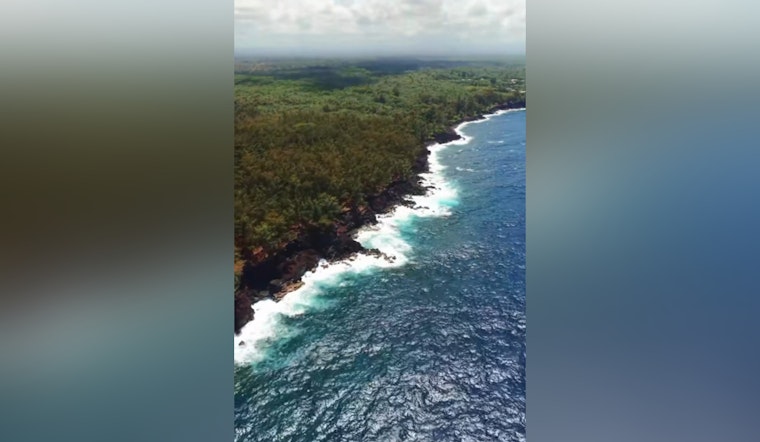
After a two-decade push from residents and cultural practitioners, Hawaii County has closed the deal on Honolulu Landing, locking up 364 acres of Puna coastline for good. The county paid roughly $3.7 million for the property, which will now be kept out of private development and held as public land. The purchase protects a stretch of shoreline and coastal forest long flagged for preservation, including archaeological and cultural sites that community groups have argued should never be paved over.
The acquisition was financed through the county’s Public Access, Open Space and Natural Resources Preservation Commission fund, better known as PONC, after the County Council cleared the way for negotiations. Council members advanced a resolution authorizing the Department of Finance to pursue the deal, and, as reported by the Honolulu Star-Advertiser, the county ultimately tapped about $3.7 million from PONC to seal the purchase.
Ancient Sites and Native Species
Honolulu Landing is rich with cultural features, including remnants of village complexes, burial sites, heiau, house platforms and traditional farming terraces. The property also includes roughly 4,000 feet of rugged, undeveloped shoreline that has so far escaped the subdivision treatment. The land supports native and endangered wildlife such as the io (Hawaiian hawk), the ope'ape'a (Hawaiian hoary bat) and the pueo, which conservation advocates say stand to benefit from long-term protection, according to reporting from the Hawaii Tribune-Herald.
Two-Decade Campaign to Protect the Land
The fight to save Honolulu Landing has been on the public agenda for years. The property first landed on the county’s PONC priority list in 2006, and since then it has been the subject of repeated petitions, written testimony and hearings where residents urged officials to keep it in public hands. Committee records show the council advanced Resolution 286-25 to authorize negotiations for the parcel, while local organizers circulated a petition to build support during the latest push. Meeting summaries and campaign materials, available online, trace a paper trail that reflects just how long the community stuck with this effort.
How the County Says It Will Manage the Site
County officials say that lands bought with PONC money come with deed restrictions and are meant to stay in public ownership in perpetuity. The focus is on cultural practice and education, with controlled access for research and stewardship rather than heavy recreational use. Lineal descendants and cultural practitioners told the Hawaii Tribune-Herald that the purchase helps affirm ancestral connections to the area; as one descendant put it, “Honolulu Landing is part of that genealogy.” Supporters say keeping the parcel intact gives community stewards and archaeologists a rare chance to care for and study a wahi pana without watching it carved into smaller lots.
Why the 2% Land Fund Matters
Honolulu Landing has also become a showcase example for the county’s “2% Land Fund,” the mechanism that funnels a slice of Hawaii County’s real property tax revenue into PONC each year. That dedicated funding is what allows the county to move when properties like Honolulu Landing come on the market, supporters argue, and it ensures that land bought with public money stays in public hands. Local coverage of the fund explains how the 2% system has helped conserve thousands of acres islandwide over the past twenty years, according to reporting from the Kaʻū Calendar.





