

























































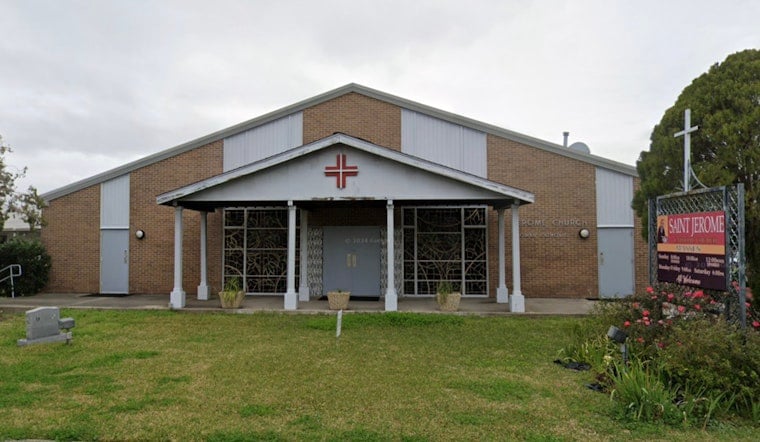
At St. Jerome Catholic Church in Kenner, Father Luis Duarte has spent months trying to keep a mostly Hispanic flock from scattering as federal immigration sweeps pull neighbors out of the pews. Weekend Masses that once packed the church have emptied out in a hurry, and the parish has leaned into bilingual liturgies and livestreamed services to hold people close from a distance. Some of the very choir members and volunteers who kept the place running are now missing from the line-up, leaving Duarte to calm a community that is both grieving and on edge.
Pastor With Colombian Roots Guides A Bilingual Flock
Father Luis Duarte, 36, grew up in Colombia and came to New Orleans in 2016 to study at Notre Dame Seminary. He was ordained in 2020 and stepped in as pastor of St. Jerome in July 2025, according to NOLA. “We come to worship God in both languages,” he told the outlet, a simple summary of a parish where English and Spanish share the microphone. Kenner itself has about 64,650 residents, and roughly 29.5% identify as Hispanic or Latino, according to U.S. Census QuickFacts.
How 'Catahoula Crunch' Hit The Suburbs
The federal enforcement push locals came to call “Catahoula Crunch” kicked off in late 2025, sending scores of DHS and Border Patrol officers into the New Orleans area, the Associated Press reported. Federal officials said the priority was immigrants with violent criminal records, but once officers appeared around Kenner and nearby suburbs, daily life shifted. Parents changed school drop-off routines, workers adjusted commutes, and neighborhood chatter turned to who had seen agents where. The AP and regional outlets tracked arrests and noted that some agents were reassigned as the operation evolved.
St. Jerome Counts The Cost
Duarte told NOLA that about 20 parishioners have been detained since the sweeps began, and weekend attendance has plunged from around 500 worshippers to as few as 100. Among those taken, parish leaders said, was a choir member named Alma, who was detained and later deported to Honduras. In response, the church has leaned on prayer, bilingual outreach, and local faith organizing to keep people connected. After the enforcement actions ramped up, the number of people watching Mass online jumped from a couple dozen to roughly 100, and St. Jerome hosted a kickoff for a “Love Your Immigrant Neighbor” initiative and unveiled a new tabernacle on May 1, 2026, the paper reported.
Support Network Inside The Parish
Even as rows of seats sit half empty, St. Jerome has kept basic support services running. The parish operates a food pantry, offers bilingual liturgies, and relies on volunteers to help connect people with legal or social services, according to the Archdiocese’s Clarion Herald and the parish website. Its online calendar lists bilingual worship and outreach events that, parish leaders say, are designed to keep neighbors fed, informed, and less alone at a time when fear can easily keep them home. For many families, the church has become both sanctuary and safety net.
Legal Fights And Policy Questions
Federal officials have defended the operation as a focused effort against serious offenders, the Associated Press reported, but records and local advocates have raised doubts about how closely the sweeps matched that description and noted that some parts of the deployment shifted as it went on. Lawmakers and community leaders pressed for clarity in hearings and public forums, and reporting by outlets such as the Louisiana Illuminator highlighted oversight efforts and the ripple effects across neighborhoods. Those arguments over scope and accountability have only added to the unease in congregations like St. Jerome’s.
For now, Duarte and his volunteers are sticking to what they can control: show up, pray in English and Spanish, and respond to the immediate needs in front of them. The church has kept its doors open, physically and online, while families adjust to sudden absences, scrambled routines, and the slow, steady work of caring for one another in a city still absorbing the aftershocks of the enforcement campaign.





