

























































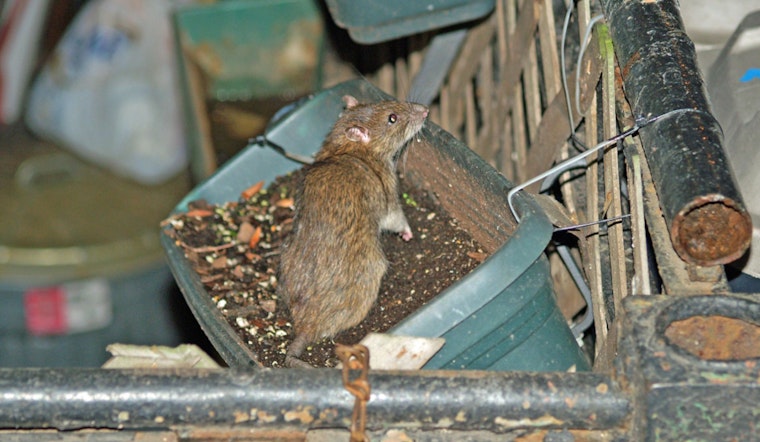
A swarm of rats racing through a sprawling homeless encampment in the Rampart/Westlake area has put Los Angeles' homelessness strategy under a harsh spotlight, after police video showed rodents darting between tents and sprawling piles of trash near West Olympic Boulevard.
The clip, filmed during an LAPD enforcement action, shows rats climbing over discarded food, mattresses and personal belongings as officers and sanitation crews move through the site. The unsettling footage has revived a familiar question at City Hall and in the neighborhood: are short-term hotel placements and cleanups enough to keep encampments from roaring back?
The LAPD Rampart Division posted the video on Instagram, describing it as part of an encampment operation near West Olympic Boulevard at Lake Street and West 10th Street, according to reporting by KTLA. Police told the station the sweep led to several felony and misdemeanor arrests, multiple citations and the removal of enough debris to finally reopen the sidewalk to pedestrians.
The operation unfolded against a larger backdrop that is anything but simple. The Los Angeles Homeless Services Authority's 2025 point-in-time numbers show roughly 43,700 people experiencing homelessness within the City of Los Angeles, and the agency links recent drops in unsheltered counts to coordinated encampment-resolution efforts. As LAHSA reports, programs like Inside Safe and Pathway Home have moved more than 6,300 people into interim housing and helped about 1,449 into permanent housing across the county.
The city's Inside Safe initiative, launched by Mayor Karen Bass in 2022, lists 5,808 people moved indoors and 1,431 permanently housed, and says it has addressed 121 encampments as of late February 2026. The mayor's office describes the effort as "housing-led," pairing outreach, quick interim hotel placements and Los Angeles Sanitation cleanup to try to restore sidewalks while connecting people to services. Mayor Bass' Inside Safe page
Neighbors and Public-Health Fears Collide
Residents and nearby business owners say the rodents and rotting food are more than an eyesore, calling them a serious health threat that has turned basic sidewalk access into an obstacle course. Several people reported that the walkways were functionally closed to those using wheelchairs or walkers.
The Los Angeles County Department of Public Health warns that rodent infestations can spread disease and urges careful, wet-down cleanup of contaminated materials to reduce risk. Officers and sanitation workers on scene recorded heaps of trash and discarded needles that required biohazard-level removal, according to public-health guidance from the Los Angeles County Department of Public Health.
Why Encampments Keep Coming Back
Advocates and watchdog groups say scenes like the West Olympic encampment are the predictable outcome of a system that leans heavily on temporary rooms but still falls short on long-term housing. People are often moved into interim hotel or motel placements, then, with limited permanent options or navigation help, some drift back to the street.
Human Rights Watch and other organizations have documented cases in which Inside Safe participants later returned to encampments, arguing that interim shelter alone cannot resolve the crisis without a much larger pipeline of permanent homes. The group notes that people tend to stay housed when permanent units are available and backed by consistent case management.
What Officials Say Comes Next
LAPD officials say the West Olympic operation was focused on reopening the public right-of-way and steering people toward outreach teams that could offer housing referrals while Los Angeles Sanitation and Environment crews cleared debris.
City leaders point to the number of placements Inside Safe has made, yet also concede there is a steep gap between the supply of interim rooms and the volume of permanent housing the city needs. For now, that viral rat video has sharpened debate over how Los Angeles should balance immediate public-health and pedestrian-access concerns with the slow, expensive work of building enough affordable housing to keep encampments from reappearing.





