

























































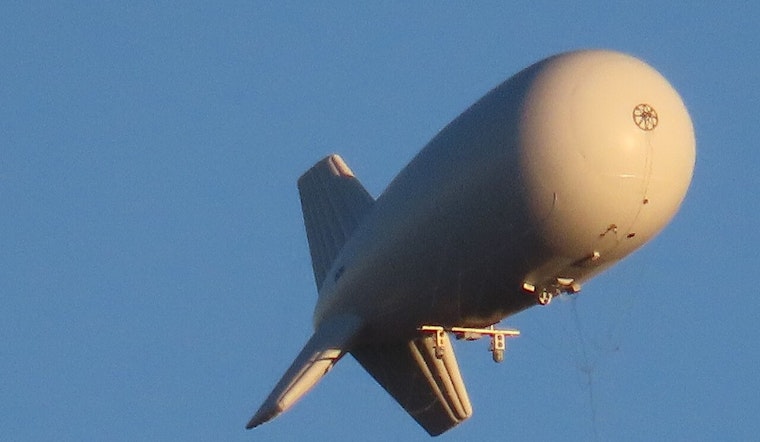
A U.S. military-owned surveillance blimp on loan to Customs and Border Protection slipped its tether near Laredo on Monday evening and drifted across the border before crashing in a remote part of Mexico. The unmanned aerostat, filled with helium and used for border surveillance, came down without any reported injuries on the ground. Mexican and U.S. authorities are now working together to locate and secure all of the wreckage while investigators sort out how the breakaway happened.
What officials say
A spokesperson for Joint Task Force-Southern Border said the 66-foot aerostat’s tether became tangled with other cables during storms and that operators tried to free it before the craft ultimately “became untethered” and floated off. Nearby thunderstorms that evening produced wind gusts up to 44 mph, according to National Weather Service data. Military officials described the aircraft only as a “medium aerostat” and declined to name a specific model. Those details were provided to reporters, according to KCRA.
History and oversight questions
This latest incident follows a high-profile mishap in March 2025, when a larger 200-foot CBP aerostat broke free from South Padre Island and floated nearly 600 miles before getting snagged in power lines near Dallas, according to the San Antonio Express-News. The broader border aerostat program combines Department of Defense-owned systems with CBP-operated platforms and contractor crews, and it has already drawn criticism over cost, safety and coordination.
A report from the Government Accountability Office on aerostats and airships noted that billions of dollars had been invested while oversight across agencies remained limited, raising coordination concerns for multi-agency operations. Those findings have resurfaced as lawmakers and safety advocates push for clearer rules on military-loaned equipment and civilian airspace safety, particularly after separate counter-drone incidents earlier this year.
What’s next
Mexican and U.S. personnel are coordinating a recovery operation in the isolated area where the wreckage was found, and CBP had not responded to requests for comment at the time of reporting, according to KCRA. Investigators are expected to dig into tethering procedures, weather protocols and contractor operations to piece together the chain of events.
The episode is likely to fuel renewed scrutiny of how military-owned systems are deployed in domestic operations and how agencies coordinate with the FAA and Mexican authorities when airborne surveillance hardware literally crosses the line.





