

























































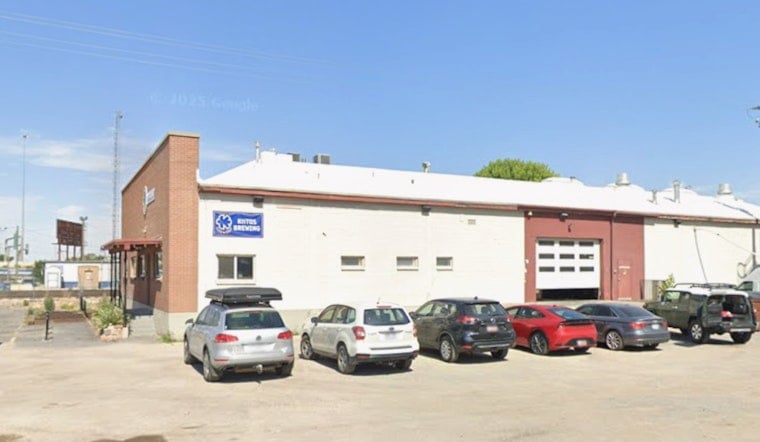
Two names many Utah food and drink fans know well, Salsa Queen and Kiitos Brewing, have quietly turned to federal bankruptcy court this spring, according to recent filings. Salsa Queen sought Chapter 7 protection in mid-February, while Kiitos Brewing filed for Chapter 11 last Friday as it tries to reorganize and keep the beer flowing. Both petitions show relatively modest assets and liabilities in the millions of dollars, a sign of the financial pressure on local producers.
As reported by KSL, Salsa Queen, the Salt Lake-born salsa company founded in 2014 by Maharba Howell, alerted customers in January that it was facing "a very real cash flow challenge" before it filed for Chapter 7. Court documents reviewed by KSL show the company listed between $100,000 and $500,000 in assets and between $1 million and $10 million in liabilities, and that the brand had grown into roughly 1,000 stores across 30 states, including Costco.
PACER records compiled by Inforuptcy show Salsa Queen LLC filed its Chapter 7 petition on Feb. 14, 2026 (case No. 2:26-bk-20754). The filing lists the company’s principal mailing address as 2550 Decker Lake Blvd., Suite 12, in Salt Lake City. The docket notes that a 341 meeting of creditors was set for March 23 and that the case is assigned to Bankruptcy Judge Cathleen D. Parker.
Kiitos Brewing Files Chapter 11 To Try To Stay Afloat
Kiitos Brewing filed a Subchapter V Chapter 11 petition last Friday, reporting between $100,000 and $500,000 in assets and between $1 million and $10 million in liabilities, according to PACER summaries compiled by Bankruptcy Observer. The filings and public records list Kiitos’s flagship location at 608 West 700 South and reference a Sugar House taproom that opened in December 2025. State licensing records also list Kiitos at 608 W. 700 S. in Salt Lake City, according to the Utah Department of Alcoholic Beverage Control. KSL reports that the brewery has described the Chapter 11 move as a reorganization filing meant to allow continued operations, and that Kiitos did not immediately respond to requests for comment.
Industry Headwinds
The timing of these filings lines up with a rough stretch for craft producers. Industry reporting shows that in 2025, brewery closures outpaced openings, with 434 closures compared with 268 openings, a trend highlighted in year-end figures. Analysts and trade coverage cited by the Beverage Industry point to shrinking volumes, rising costs, and competition from ready-to-drink products as some of the biggest headwinds for smaller brewers.
Against that backdrop, Salsa Queen’s own online storefront is still up and still lists a gift-card option, but carries a notice that "Online ordering is currently down," a hint that direct sales remain strained even as the Chapter 7 case moves forward. The Shopify-powered site displays the company’s fresh and freeze-dried product lines along with a store locator that previously showed extensive retail distribution, according to Salsa Queen's website.
What Chapter 7 Versus Chapter 11 Means
Under federal law, Chapter 7 is generally the liquidation track. A court-appointed trustee gathers and sells a debtor’s nonexempt assets and distributes the proceeds to creditors, according to guidance from the U.S. Courts. Chapter 11, by contrast, usually allows a business to stay in control of day-to-day operations while it negotiates a court-approved plan to restructure its debts.
Kiitos filed under Subchapter V of Chapter 11, a streamlined option created for smaller businesses that can allow a faster, lower-cost reorganization process if the company qualifies and the court ultimately confirms a plan.
Creditors, suppliers, and anyone else with money on the line will now be watching filing deadlines and docket updates. PACER summaries indicate Salsa Queen’s Chapter 7 case lists between 50 and 99 creditors. Kiitos reported fewer creditors at the time of its Chapter 11 filing and has started early-stage reorganization procedures, according to court summaries compiled by Bankruptcy Observer. For the moment, the bankruptcy dockets themselves remain the most detailed public record of where each company stands, and any meaningful developments are likely to show up there first.





