

























































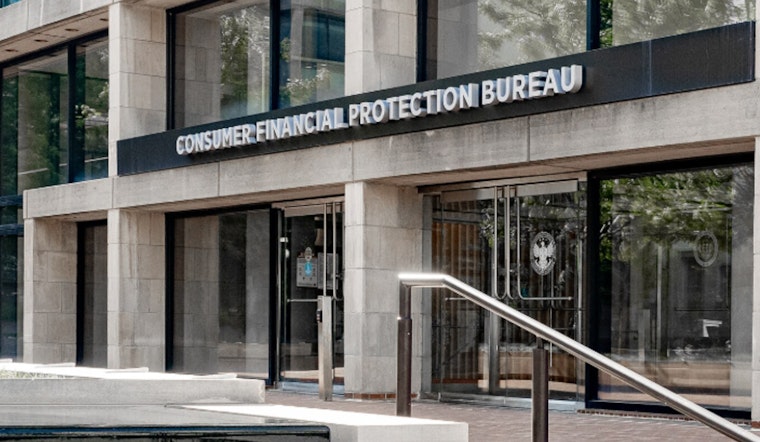
Senate Democrats are teeing up a series of votes Wednesday to try to undo sweeping rollbacks at the Consumer Financial Protection Bureau, turning a dry regulatory fight into a high-stakes election-year test for vulnerable Republicans. The push targets dozens of policy changes made since President Trump’s team took control of the CFPB in February 2025, including a May 2025 move that yanked 67 guidance documents Democrats say shielded borrowers from abuse.
According to The Associated Press, Democrats will file 20 joint resolutions of disapproval under the Congressional Review Act to challenge CFPB actions touching debt collection, buy-now-pay-later firms, overdraft practices and other corners of consumer finance. Sen. Elizabeth Warren, the top Democrat on the Senate Banking Committee, is leading the campaign and says 20 senators will take to the floor to detail what the party views as harmful rollbacks.
How the votes will proceed
The Democratic caucus has placed the resolutions on the Senate calendar and is planning a mix of voice votes and roll calls on Wednesday, according to the Senate Democratic Caucus schedule. The calendar lists the specific S.J.Res. numbers queued up for consideration.
Under the Congressional Review Act, which provides expedited procedures and allows a committee to be discharged by a petition of 30 senators, disapproval resolutions can reach the floor quickly for an up-or-down vote, according to a Congressional Research Service explainer. The law is designed to make it easier for Congress to overturn recent agency actions, not to change the number of votes needed to do it.
What rollbacks Democrats are targeting
Acting CFPB Director Russell Vought formally withdrew 67 guidance documents in May 2025, affecting fair-lending guidance as well as oversight of overdraft programs and buy-now-pay-later products, in a sweeping pullback that legal analysts have cataloged. Analysts at Morgan Lewis note that the rescissions cover interpretive rules, advisory opinions and policy statements the bureau had relied on to enforce consumer protections.
Critics say those changes strip the CFPB of key tools it used to police the market. Reporting and feature pieces have also pointed out that Vought has signaled an interest in shrinking the bureau’s footprint or even closing it altogether. Bloomberg reported that Vought has said he wants to shut the agency down.
CFPB operations and staffing
The bureau’s day-to-day work has been shaken since early 2025, after an order halted many supervisory and enforcement activities. In the wake of that stop-work directive, two senior enforcement officials announced their resignations, CNBC reported.
The pause, combined with a sharp shift in priorities, has left significant parts of the agency focused on unwinding earlier initiatives instead of launching new investigations or finishing updated rules.
Why Democrats say this matters
Democrats argue the rollbacks leave borrowers more vulnerable to abusive practices and ease pressure on emerging fintech firms that might otherwise face tougher scrutiny. They point to polling from a bipartisan team at Lake Research Partners and Chesapeake Beach Consulting that found broad support for the CFPB’s mission. Lake Research Partners summarized that more than eight in ten Americans back the agency’s role, including a substantial share of Republicans.
They also lean on the bureau’s track record. Reports highlight that the CFPB has returned roughly $17.5 billion to consumers and directed about $4 billion in penalties into a victims’ relief fund through past enforcement actions. Consumer Reports outlines those cumulative figures, which Democrats cite as proof the agency delivers tangible money back into people’s pockets.
Political math
The resolutions face long odds in a narrowly divided Senate, where Republicans can likely block most of the Democratic offensive. Still, Democrats say the exercise is about more than winning floor votes. It gives them a paper trail heading into 2026 against swing-state and swing-seat Republicans such as Susan Collins of Maine, Dan Sullivan of Alaska and John Cornyn of Texas.
Warren has urged GOP senators to “listen with open ears” and vote “on behalf of the consumers they were elected to represent,” according to The Associated Press. No one in either party is pretending these votes will be forgotten by campaign season.
Legal implications
If Congress were to pass a disapproval resolution and the president signed it, the CRA would wipe the targeted rule off the books and block the agency from issuing a “substantially similar” rule in the future without new authority from Congress, according to the Congressional Research Service. The fast-track procedures simply make it easier to bring such resolutions to the floor; they do not change the basic political math required for passage.
For now, the coming Senate votes serve as both a policy confrontation and a campaign-stage moment. Democrats get valuable floor time to hammer the CFPB rollback narrative, while Republicans are pushed to cast clear, on-the-record votes about whether they side more with industry complaints or with existing consumer protections as the 2026 elections edge closer.





.jpg)