

























































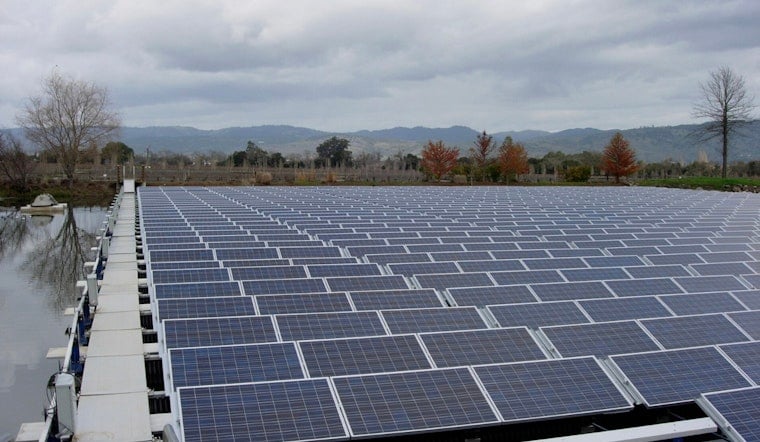
A plan to float a roughly 1.6‑megawatt solar array across Peekskill’s Camp Field Reservoir, the city’s drinking‑water source, has become a neighborhood flashpoint ahead of a public hearing next Tuesday at City Hall. Supporters say the project would cut municipal energy costs and generate about $2 million in combined savings and lease payments over 25 years, while opponents warn the panels could threaten local water quality and want more testing before any construction begins.
What’s being proposed
According to the City of Peekskill, Working Power ECP LLC, partnering with the Ecological Citizen’s Project, is proposing a roughly 1.63 MWdc floating solar array on the southern Camp Field Reservoir at 1000 Lindbergh Place. The plans call for about 2,880 580W bifacial panels mounted on Xfloat single‑axis tracker floats, with marine‑rated mooring lines and helical anchors, plus on‑shore equipment that would connect to the grid through a Con Edison interconnection study. RETTEW is listed as the engineering, procurement and construction contractor, and the developers say the system is being designed to minimize tree clearing and protect surrounding habitat.
Why neighbors are worried
Neighbors quoted in local reporting say the idea of solar panels floating on top of a drinking‑water reservoir feels untested and potentially risky. "We just don't want it messing with our water supply," Kevin Williams told CBS News, and other residents have pushed for more independent testing before any work begins. Project backers point out that the reservoir feeds an on‑site treatment plant and say the developers have already paid for an outside water‑quality review, but skepticism has not faded.
Backers' safeguards and community benefits
Project filings show the team paid for a third‑party review by Arcadis, built lease language that requires removal of equipment if testing ever ties contaminants to the array, and pledged safety measures at the reservoir, according to the City of Peekskill. The same documents outline projected community benefits: an estimated $780,000 in lease payments plus about $1.24 million in electricity‑bill savings for low‑ and moderate‑income households over 25 years, roughly $2.02 million in total, alongside anticipated greenhouse‑gas reductions and workforce‑training commitments.
Permitting, oversight and what’s at stake
The proposal has already gone through several rounds of local review and will need a public‑interest determination and State Environmental Quality Review (SEQRA) before it can be fully approved, according to local reporting. As reported by the Peekskill Herald, the Common Council has insisted on independent testing and contractual safeguards before granting the zoning exemptions the project requires. Final sign‑offs will depend on detailed engineering studies, the outcome of Con Edison’s interconnection review, and any conditions the city decides to attach to a lease.
How this fits into broader trends
Floating photovoltaic systems are still relatively uncommon in the United States, but they are slowly gaining ground on reservoirs and closed basins, where open water is plentiful and land conflicts are fewer. Federal researchers have pointed to significant technical potential for reservoir‑mounted arrays, and other municipalities have treated similar projects as early test cases. The Department of Energy’s National Renewable Energy Laboratory has highlighted reservoirs as promising locations for floating solar, and prior projects and proposals in places such as Cohoes, N.Y., and New Jersey have shaped design choices that developers reference in Peekskill’s plans. NREL and local reporting on Cohoes provide context on both the risks and the technical work involved.
What to expect at the public hearing
City officials and reporting say the public hearing is set for next Tuesday at 7:30 p.m. in the Council Chambers at Peekskill City Hall, according to CBS News. The session is expected to feature presentations from the project team and time for residents to press their questions and concerns, and the overall planning process will continue as the city completes its environmental review.





