

























































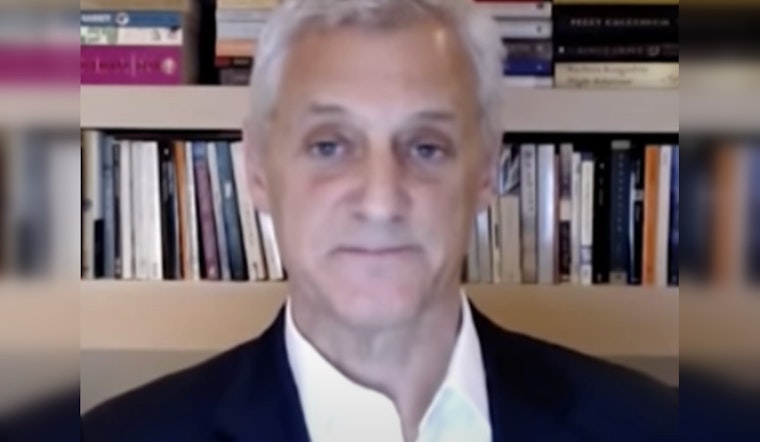
Standard Chartered chief executive Bill Winters is trying to put out a fire of his own making after referring to some staff as “lower-value human capital,” just as the London-listed bank laid out plans to shrink its corporate-functions workforce by more than 15 percent by 2030. That target, the bank has said, could mean roughly 7,000 to 7,800 roles, and labor groups say the phrasing lays bare how executives are thinking about an AI-driven shake-up of white-collar jobs.
Winters' remarks and the bank plan
At an investor event in Hong Kong, Standard Chartered set fresh targets to lift income per employee and leaned hard on automation as a productivity booster, flagging a planned “reduction in corporate functions roles of >15 per cent by 2030,” according to Standard Chartered. The bank said cuts would concentrate on corporate functions such as human resources, risk and compliance, a pivot Winters described as “replacing, in some cases, lower-value human capital” with investment and technology.
Apology draws scrutiny
Winters later took to LinkedIn, posting two messages in which he expressed regret over his “choice of words” and said he was “sorry” for upsetting colleagues, as Reuters reported. Regulators in Hong Kong and Singapore have asked the bank to clarify the comments, and Winters has circulated a transcript of his remarks internally as he works to calm staff concern.
Unions say words matter
UNI Global Union’s head of finance, Angelo Di Cristo, told the Boston Globe that Winters “should remember that we are talking about thousands of people and families, not human capital,” and he pledged that the federation would back local unions seeking a fair deal, according to the Boston Globe. Union officials argue that banks have too often rolled out automation with little involvement from organized labor and say they will push for binding commitments on reskilling and redeployment.
Rivals urge retraining
Across town in banking-land, rivals are sending their own signals. HSBC’s chief Georges Elhedery told investors that “generative AI will destroy certain jobs and will create new jobs,” a warning reported by The Star. Big lenders are talking up plans to hire more AI specialists even as they slim down routine roles, a balancing act that analysts say will put training and oversight programs under pressure.
Why New York is watching
The fallout is not just a City of London headache. At New York City Hall, worries about AI and jobs have already reached the budget spreadsheets. City Comptroller Mark Levine released a report mapping out scenarios for AI’s impact on employment and tax revenue and urged officials to beef up the city’s rainy-day fund to guard against potential hits to income, according to the Office of the New York City Comptroller. The analysis lays out contingency options aimed at protecting core services if automation dents the tax base.
What unions want and what to watch
Labor leaders say a brief apology is not going to cut it. They want concrete, funded pathways for staff whose roles are automated away, clear and transparent redeployment targets, and a guaranteed voice in how AI tools are rolled out, according to union officials and advocates. The key test, Bloomberg notes, will be whether companies back up their rhetoric with measurable budgets and firm timelines.
Bottom line
Winters’ LinkedIn mea culpa may cool some of the immediate outrage, but it does not resolve the bigger fight over who wins and loses in banking’s AI pivot. Workers, unions, regulators and investors will all be watching the fine print on reskilling programs, severance terms and the actual number of “higher-value” jobs that emerge. Standard Chartered has pledged to support affected colleagues “with care and respect” as automation ramps up, and the coming months will show whether that promise holds up in practice or remains just another carefully worded statement.



_at_World_Economic_Forum_Davos_2021.png)