

























































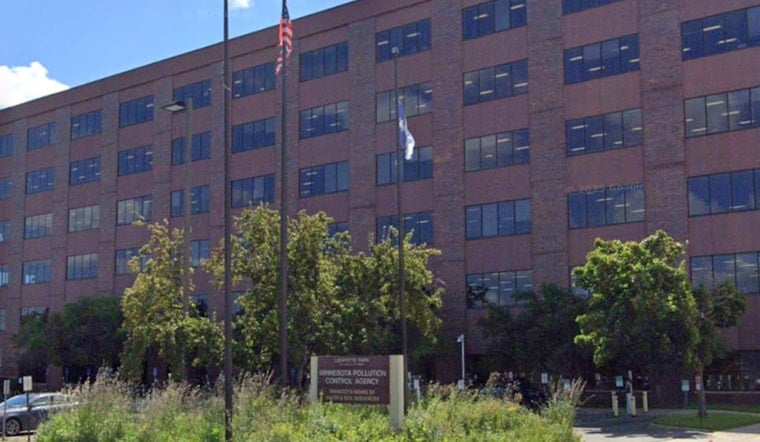
The Minnesota Pollution Control Agency has hauled 3M back into court, accusing the company of ongoing releases of PFAS, the so called “forever chemicals,” tied to operations around its Cottage Grove facility. The state says the contamination has seeped into groundwater and surface waters, is reaching public resources, and wants a court ordered cleanup, compensation for natural resource damage, and civil penalties. 3M, for its part, has already asked a federal judge to take over the case.
Court records show the complaint was filed in Washington County and that 3M filed a notice of removal to federal court on May 1, 2026. The case is now listed on the federal docket as 0:2026cv02440. According to the U.S. District Court docket on Justia, the initial filings include 3M’s notice of removal along with related attorney appearances and consent documents. U.S. District Court docket on Justia
What the MPCA alleges
MPCA’s complaint, as reported by KARE 11, alleges that 3M has discharged PFAS into groundwater and surface waters near the Cottage Grove plant and that industrial and stormwater flows are reaching the Mississippi River. The suit cites PFOS concentrations in some samples of roughly 310,000 parts per trillion, compared with a Minnesota site specific standard of 0.05 parts per trillion, a gap that state regulators clearly view as untenable.
MPCA also says remediation ordered in 2022 is still not fully carried out, that 3M’s groundwater extraction network is too limited for the job, and that the state is asking the court for injunctive relief that would force stronger cleanup efforts. On top of that, the agency seeks compensation for natural resource damage and civil penalties of up to $30,000 per violation per day.
3M's response
3M has moved the case into federal court and, in filings attached to its notice of removal, says it will vigorously defend against Minnesota’s claims. In those papers on the federal docket, the company contends that at least some of the contamination may stem from testing of firefighting foam manufactured under Department of Defense specifications, a detail that could become central to its legal strategy.
The company also points in its investor disclosures to the fact that 3M completed its planned exit from PFAS manufacturing by the end of 2025, a milestone it is likely to highlight as the litigation unfolds. For the removal papers and related court filings, see the federal docket. U.S. District Court docket on Justia; for company disclosures on its PFAS exit, see 3M's SEC filings.
Why this matters
The new lawsuit arrives on top of a long and expensive PFAS history in Minnesota. The state’s earlier 2010 complaint against 3M was resolved in 2018 for roughly $850 million to address drinking water and natural resource harms, according to the Minnesota Attorney General. Separately, 3M reached a multibillion dollar settlement to help remediate PFAS in U.S. public water systems, a deal the company highlighted in 3M's press release on its public water settlement.
Those earlier agreements, along with continued discovery of PFAS in local water and wildlife, are part of why MPCA now says stronger action is necessary. In effect, the state is telling the courts that prior payouts and cleanup plans have not fully closed the book on PFAS pollution around Cottage Grove.
What to watch in court
Because 3M removed the case to federal court, the opening rounds are likely to center on jurisdictional fights. One key question is whether 3M can successfully invoke a federal contractor or federal officer defense, which could help keep the dispute in federal court rather than sending it back to Washington County.
Courts have split in recent PFAS cases on how far that defense reaches. The U.S. Court of Appeals for the Fourth Circuit recently held that removal can be plausible when state law claims significantly overlap with federal contract work, a line of reasoning that both sides may try to lean on or distinguish here. Fourth Circuit opinion
Legal implications
If MPCA prevails, the court could order accelerated or expanded cleanup, award payments for damage to wildlife and other natural resources, and impose civil penalties. If 3M succeeds on jurisdiction or federal defense grounds, the company could limit how far state law remedies can reach some of the claims.
MPCA’s request for penalties of up to $30,000 per violation per day, along with its natural resource damage claims, are among the most consequential pieces to watch as the case moves forward. As reported by KARE 11, those requested civil penalties and injunctions supply much of the leverage the state is seeking over 3M.
The case is now active on the federal docket, and both sides are expected to press a mix of procedural and substantive arguments. In the early weeks, the court will decide whether to keep the dispute in federal court, send it back to state court, or potentially resolve threshold challenges. The initial notice of removal and complaint were filed on May 1, 2026, and additional briefs or scheduling orders are likely to appear on the docket in the coming weeks.



