

























































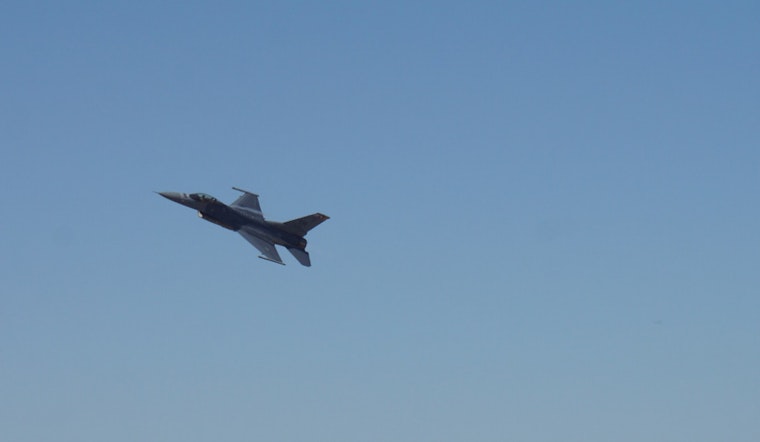
A civilian pilot wandering into some of the country’s most closely guarded airspace on Tuesday wound up with a high-powered escort, as F-16 fighter jets scrambled over Washington, D.C. Military officials said the plane crossed into the D.C. Special Flight Rules Area around 11:15 a.m. and was escorted out without further trouble. The intercept briefly ramped up military air activity over the National Capital Region, and authorities reported no injuries or arrests.
North American Aerospace Defense Command (NORAD) said in a DVIDS release that fighters from the Continental U.S. NORAD Region intercepted the general-aviation aircraft and escorted it clear of the restricted zone. The command said the action “ensured it remained clear of restricted airspace without further incident” and described the response as part of NORAD’s layered mix of radar, satellites and fighter aircraft that constantly patrol U.S. skies.
How the D.C. SFRA works
The Washington, D.C., Special Flight Rules Area is roughly a 30-nautical-mile (about 33 statute miles) ring around the capital, with a tighter Flight-Restricted Zone that includes Ronald Reagan Washington National Airport. To enter the SFRA, the Federal Aviation Administration requires pilots to obtain advance clearance, use an altitude-encoding transponder and stay in direct radio contact with air traffic control. Those tools let controllers track aircraft in real time and, when something goes wrong, coordinate with the military for an escort. FAA guidance spells out the specific requirements for anyone flying in the area.
Not unusual in high-security zones
Intercepts like Tuesday’s are standard procedure when aircraft drift into protected airspace. CBS News has reported multiple intercepts near Mar-a-Lago and a string of temporary flight restriction violations at Bedminster last year, and fighter jets blaze flares over Mar-a-Lago in similar scrambles in Palm Beach that followed expanded FAA restrictions. Taken together, they show how aggressively presidential and other high-security airspace is monitored.
Flight-safety takeaways for pilots
Aviators are expected to do their homework before they even touch the starter. That means checking Notices to Air Missions (NOTAMs) and the FAA’s TFR map for temporary restrictions, and confirming that transponders and radios are working properly. NORAD’s guidance reminds intercepted pilots to call on guard frequencies 121.5 or 243.0 and reverse course until they receive further instructions. Sticking to those playbook steps helps end these encounters safely. The FAA also warns that civil penalties or certificate actions are on the table for pilots who violate SFRA rules.
For everyone on the ground, the episode is one more reminder that the capital’s airspace is watched closely and that even minor navigation errors can bring a major response. Residents who remember a 2023 incident, when fighter jets went supersonic and triggered a boom heard across the region, know these responses can be startling even when they end without harm, a loud illustration of the tradeoff between public alarm and precautionary defense.


.jpg)