

























































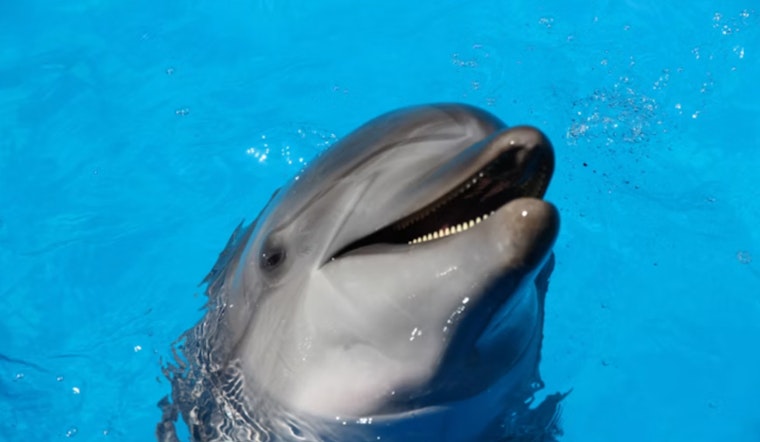
Galveston Bay's newest local celebrity is not a fisherman, a tourist, or even human at all; it is a lone bottlenose dolphin nicknamed "Dino" that researchers say was missing its tail flukes when they first encountered it. During a September 2022 monitoring survey, they watched the injured dolphin use altered body motions to forage near a shrimp trawler, and say it still appeared to be in reasonable condition despite the severe injury. That single encounter has since grown into a formal scientific note and a conservation cautionary tale that researchers hope will draw attention to hazards such as discarded fishing line.
According to the Houston Chronicle, Galveston Bay Foundation researchers followed Dino for about 35 minutes during that September 2022 survey before realizing the dolphin was missing its flukes entirely. Vanessa Mintzer, the foundation's director of Dolphin Research and Conservation, told the Houston Chronicle that "Dino swims more like a fish than a dolphin," and pointed out signs of muscle atrophy and behavioral changes. The Houston Chronicle also reports that the team's observations were published last week in the journal Aquatic Mammals.
How Researchers Documented Dino
In a post on the Galveston Bay Foundation website, the research team says the dolphin was first spotted in the bay's study area near the Houston Ship Channel and briefly joined about 25 other dolphins as they foraged. Photo-identification work turned up no matches in the program's catalog of more than 1,000 animals, which suggests Dino may be a transient visitor rather than a resident. The foundation's write-up also links to the scientific note and names partners including the National Marine Mammal Foundation and the University of Houston–Clear Lake's Environmental Institute of Houston.
Likely Cause and Global Context
Researchers told the Houston Chronicle that the most likely explanation for Dino's missing flukes is entanglement in fishing gear, although they said a shark bite, propeller strike, or congenital issue could not be ruled out. The team also notes that similarly flukeless dolphins have been documented in places from South Carolina to South Korea, Uruguay, and the Mediterranean, which suggests some dolphins can adapt to life without flukes. In 2024 the foundation mounted a coordinated search with four boats and did not relocate the animal, a result that underscores how elusive transient individuals can be.
Boaters and Beachgoers: What To Do
According to NOAA Fisheries, viewers should stay at least 50 yards from dolphins and porpoises to avoid disturbing them, a basic rule that local groups echo. The Galveston Bay Foundation asks boaters not to feed or touch dolphins and to report any dead, injured, or distressed animals to the Texas Marine Mammal Stranding Network; the foundation's post includes links to the scientific note and additional resources. Those precautions, researchers say, help reduce the chance that curious or careless human behavior will turn another animal into a high-profile case like Dino's.
Dino's story is both rare and instructive. The dolphin's survival so far shows striking resilience, and researchers say the case also delivers a clear local warning about pollution and discarded gear. Whether Dino ever returns to Galveston Bay, the sighting has already become a small but pointed reminder that human choices on the water have real consequences for the wildlife that share it.





