

























































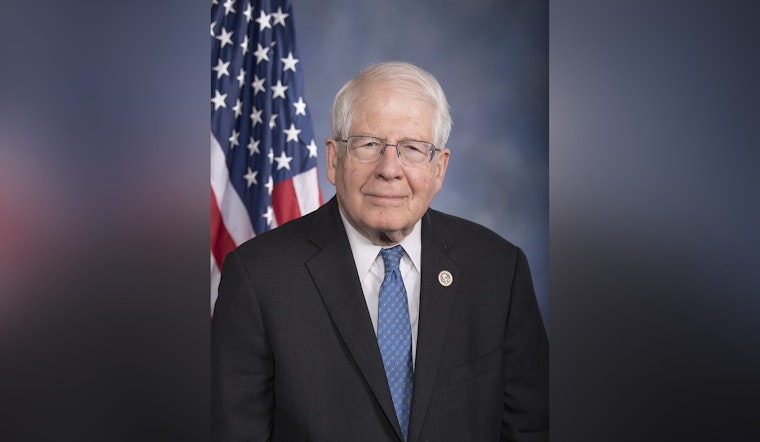
Former U.S. Rep. David Price is back in the national mix, joining 62 other former officials in a sharp reminder to Congress: war is supposed to be their call. The bipartisan group fired off a letter this week urging lawmakers to reclaim their war-making authority just as the Iran conflict crossed the 60-day marker laid out in the War Powers Resolution.
The move was organized by Issue One’s ReFormers Caucus and delivered April 30 to the leaders of the House and Senate Armed Services committees. It arrived as a formal appeal for Congress to reassert its Article I powers and tighten oversight, according to Issue One. The signers asked Armed Services leaders to push for clear answers on U.S. objectives, where operations are taking place and how much the whole thing is costing.
What the letter says
Sixty-three former Cabinet officials, governors and members of Congress put their names on the document. The list runs from former Senate Majority Leader Tom Daschle to former Defense Secretary Leon Panetta, and it includes longtime Triangle representative David Price. The signers say they are "united in our belief that Congress must reclaim its constitutional authority," according to the text of the letter. The full letter and roster of signers are posted by Issue One, while details on Price’s post-Congress role are listed on Duke University.
Costs and casualties front and center
The letter does not tiptoe around the human and financial toll. The signers cite reports that 13 American service members have been killed, more than 200 wounded and more than 1,300 Iranian civilians killed. They also point to a Pentagon briefing that put the campaign’s cost at $11.3 billion in its first six days. Those figures surfaced in coverage of the letter, according to The News & Observer.
How the War Powers clock is supposed to work
The fight over process boils down to a law written in the Vietnam era. Under the 1973 War Powers Resolution, presidents must notify Congress within 48 hours of sending U.S. forces into hostilities and must generally end involvement after 60 days unless Congress signs off on continued action. A 30-day withdrawal window is allowed, as laid out on Congress.gov. The letter’s authors argue those mechanics leave too much wiggle room, especially around what legally counts as “hostilities,” and say it is on Congress to tighten the language.
White House pushback and a legal tug of war
The administration has taken the position that a ceasefire effectively paused or "terminated" hostilities for War Powers purposes, and it formally notified Congress of that view. That legal reading has not exactly sailed through unchallenged. Reporting by The Washington Post shows Democrats and some Republicans questioned the interpretation and kept pressing for robust congressional oversight.
What Congress could actually do
The former officials are not just venting. Their letter urges Armed Services leaders to push for hearings, reforms and statutory fixes to the War Powers framework itself. Members of Congress have been debating options, even as attempts to rein in the administration have struggled to draw enough support to force changes, according to Defense News. The signers argue that restoring Article I authority is less about party labels and more about Congress defending its own turf.
For voters in the Triangle, Price’s signature ties a familiar local figure and longtime oversight advocate to a very current fight in Washington. Whether Congress follows through with hearings or new laws is an open question, but the letter adds another layer of pressure as lawmakers head into an already crowded and contentious calendar.





