

























































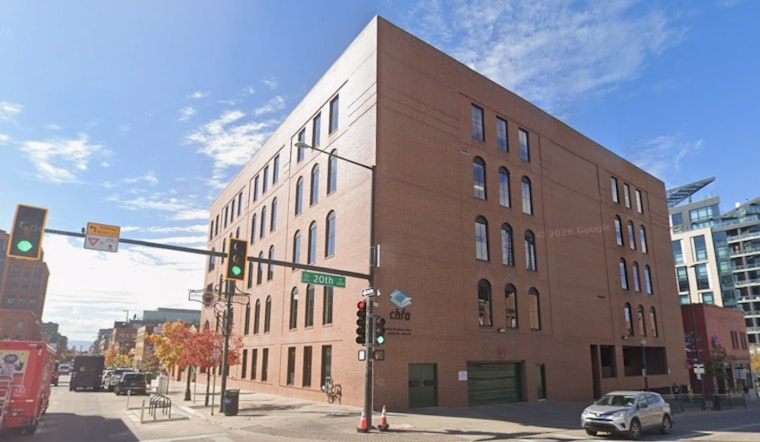
Colorado’s housing finance authority has lined up a fresh round of federal and state housing tax credits for 14 developments across the state, and Denver’s Park Hill and Montbello neighborhoods landed on the winners' list. The mix of adaptive-reuse projects and new construction is expected to produce 634 income-restricted homes, with Park Hill’s Mosaic Community Campus conversion and a new batch of family townhomes in Montbello among the standouts for city residents.
According to the Colorado Housing and Finance Authority, the Round One reservations of federal 9% and standard state housing tax credits total $23,003,741 in federal 9% credits and $7,000,000 in state credits across 14 developments. The authority’s award report shows projects in Denver, Aurora, Colorado Springs, and a string of smaller communities, adding up to 634 low-income units tied to this batch of credits. Local coverage of the allocations, including the Denver projects, also appeared in BusinessDen.
Park Hill: Mosaic Dorms Headed Toward Supportive Housing
In Park Hill, Archway Communities and the Denver Housing Authority have been working to turn former Johnson & Wales University dormitories into an affordable housing cluster known as the Mosaic Community Campus, complete with shared community areas and on-site service partners. That partnership has already closed key financing and pushed ahead on designs to convert the former dorms into apartments, according to the Denver Housing Authority. The latest tax-credit reservation will plug equity into the financing stack and help move the long-discussed conversion closer to actual construction.
Montbello Townhomes Aimed Squarely At Families
As detailed by Colorado Housing and Finance Authority, Montbello Townhomes, sponsored by Delwest Development, is planned as a 39-unit community of four-bedroom townhomes. The plan includes an on-site early childhood education space and partnerships with local youth programs. The project is being designed as all-electric and photovoltaic-ready, with units targeted to households earning roughly 30% to 60% of the area median income. Those features track with a broader theme in this round of pairing affordability with services and energy efficiency.
Statewide Spread And How The Money Works
The Round One awards reach into both urban and rural markets, touching communities from Aurora and Colorado Springs to Montrose, Lafayette, and Towaoc. That spread signals the authority’s effort to distribute credits across very different housing markets rather than concentrate them in a single metro. National housing groups note that the reserved credits are expected to leverage more than $219 million in private equity that developers raise by selling the credits to investors, helping finance both new construction and preservation of existing homes. That combination of federal and state credits, plus local gap funding, will be crucial to closing each deal and keeping the 634 units affordable over the long term.
What Happens Next
With reservations secured, project sponsors now move into the less glamorous but essential phase: final design work, permitting, and credit syndication to assemble full construction financing. Archway and other development teams are aiming to start renovation or break ground in late 2026 or early 2027, depending on how local approvals and remaining gap funding shake out, according to local reporting. How quickly the 634 income-restricted units open their doors will hinge on that timeline's puzzle of credit syndication, additional subsidy awards, and municipal sign-offs.





