

























































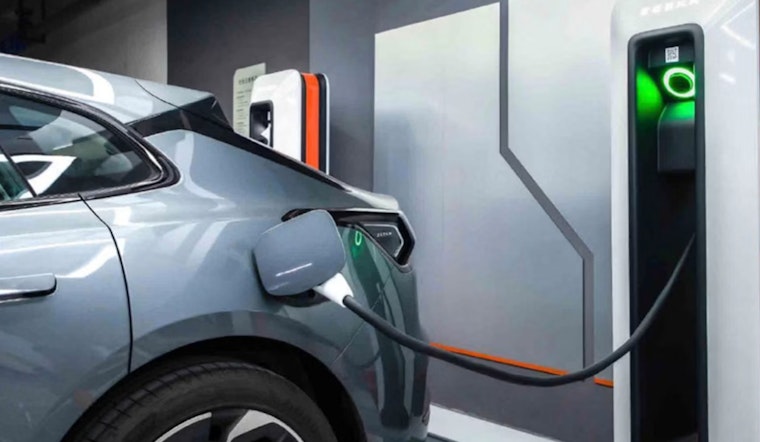
Across Houston and across much of Texas, electric drivers say the charging map feels like it was drawn with a highlighter and an eraser: a fast hub here, a long empty stretch there. The mismatch between chargers and cars is getting harder to ignore as gas prices climb, pushing some Texans to reconsider whether an EV really fits into daily life. Local owners and advocates say the challenge now is building chargers that people will actually use, and training enough crews to get them in the ground and keep them running.
At a Shell Recharge hub near I-10 in the Houston Heights, drivers told reporters that "they're fast. The charging doesn't take much time," while another Heights resident said it often "takes me a while to find a charging station." Evolve Houston president Casey Brown says the group is focused on getting the right players in the room and on building a workforce for future growth, especially in neighborhoods that lack access. The Texas Department of Transportation told Spectrum News that Texans registered to drive electric vehicles more than tripled to nearly 457,000 between 2022 and 2025, that the state is adding about 1,500 EVs a week, and that officials expect to add roughly 300 National Electric Vehicle Infrastructure funded stations in 2026.
Sales And The Used EV Bump
According to Cox Automotive, new EV sales in April totaled an estimated 76,889 units, which is about 23% lower than a year earlier and roughly 6% below March. Used EV transactions are telling a very different story. Cox reports about 42,080 used EV sales in April, a year-over-year increase near 17% as more off-lease models hit dealer lots. Analysts there say 2026 is shaping up as a year of adjustment, with affordability and a wider mix of models nudging some buyers toward the secondary market instead of the showroom.
Charger Counts: Federal Snapshot Vs. State Tallies
Federal data from the U.S. Department of Energy's Alternative Fuels Data Center shows roughly 80,411 public electric-station locations and 249,685 ports nationwide, with about 3,744 locations and 12,302 ports listed in Texas. That federal snapshot is slightly lower than the state tally reported to local outlets, which quotes TxDOT at more than 4,300 stations, a gap likely explained by whether planned, private or older legacy chargers are included in the count.
What Officials And Groups Are Doing
The National Electric Vehicle Infrastructure program is pushing federal dollars into state corridor plans. The Bipartisan Policy Center notes that TxDOT is one of the largest NEVI recipients, with roughly $408 million for 2022 to 2026 to help fill highway gaps. Local nonprofits such as Evolve Houston are working to make sure those projects serve communities equitably and to train crews for installation and maintenance, according to the organization. At the same time, national reporting has tied higher pump prices from the war in Iran to renewed consumer interest in fuel efficiency and electrified vehicles, a trend covered by AP News.
Bottom Line
The EV transition in Texas now looks like a careful balancing act: softened demand for new models, more used EVs on the market and a public charging network that still feels patchy. For drivers in Houston and across the state, that means there are pockets of reliable fast charging, but how quickly Texas catches up will depend on more stations, clearer and more consistent data, and enough trained workers to keep the plugs live.





