

























































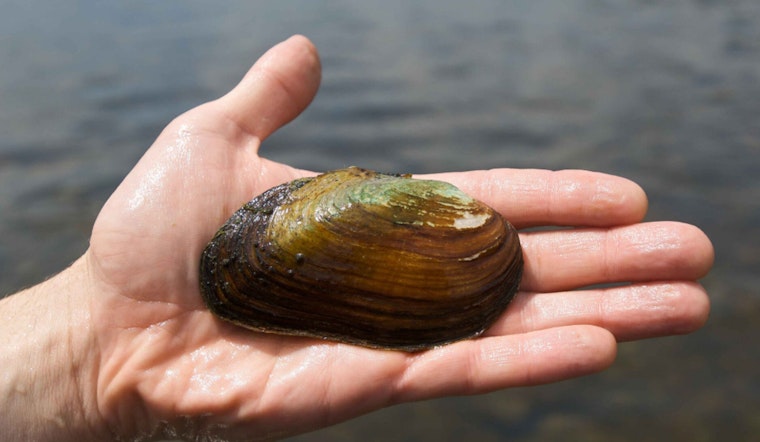
In a quiet lab tucked inside Fairmount Water Works, Philadelphia is raising an army of native freshwater mussels that scientists say could act as living filters for the Schuylkill and Delaware rivers. The Philadelphia Water Department and its partners are ramping up the program and testing reintroductions that, if they work, could reshape how the city tackles urban water quality.
The project operates out of a demonstration hatchery managed by the city's Aquatic Research and Restoration Center, and Lance Butler, who launched the effort in 2017, told Philadelphia Magazine that "we have the first, the only that we know of, municipally owned and operated freshwater mussel hatchery in the United States." PHILADELPHIA Today notes that the team is focusing on mussel species native to urban rivers, streams and canals.
Small Hatchery, Big Ambitions
According to its blog, the Fairmount hatchery has already propagated more than 100,000 juvenile mussels and produced roughly 30,000 in recent seasons, and staff are now shifting from caged experiments to pilot releases in spots like the Manayunk Canal. Those juvenile mussels are being used in field trials and lab studies that track survival, growth and any measurable water-quality gains. The site also doubles as an education lab where volunteers and students learn propagation techniques. Fairmount Water Works details the taxa the team has successfully propagated and the hatchery's next steps.
How Mussels Clean Rivers
Freshwater mussels are suspension feeders that pull in water and strip out suspended particles, bacteria, nutrients and even microplastics as they eat. Studies have found that a single mussel can filter from the single digits up to the double digits in gallons per day, depending on its species and size. Clearer water can mean more light for bottom plants, better habitat for small fish and, over time, mussel beds that act like compact ecosystem engines. For more technical detail and utility-focused reporting, see the American Water Works Association and the literature review in Water.
Propagation Breakthroughs
One big practical headache has always been the mussels' complicated life cycle, which requires a host fish for juvenile attachment. Fairmount scientists recently reported that hybrid striped bass can serve as an effective host for species like the alewife floater, more than doubling juvenile yields in trials. That operational breakthrough helped convince partners that scaling up is realistic, according to reporting by The Philadelphia Inquirer. The shift eases a major logistical bottleneck and cuts the per-mussel cost of production.
Scaling Up At Bartram's Garden
Next on the agenda is a production hatchery and ecosystems education center at Bartram's Garden that could boost output to around half a million juvenile mussels a year while offering hands-on programming for local students. Bartram's Garden describes the effort as a watershed-scale restoration hub, and federal Community Project Funding has already helped pay for construction planning. See Bartram's Garden and the funding announcement from Congresswoman Mary Gay Scanlon for details on the partnership and grant support.
Proof, Policy And Price
City scientists are clear that mussels are not a silver bullet. Regulators and ratepayers will want long-term, site-specific data on survival, water-quality benefits and cost-effectiveness before this work is treated as credited blue infrastructure. Drexel's Danielle Kreeger and other researchers argue that mussel-based restoration could remove a pound of nitrogen for far less money than some land-based strategies, but those cost projections still have to be proven at scale. Philadelphia Magazine lays out both the technical promise and the evidence that has yet to be collected.
What This Means For Philly
If the trials deliver, expanding mussel beds could help clear the water for fishing, boating and maybe even swimming, while providing wider ecosystem benefits throughout the watershed. The Philadelphia Water Department frames the mussel work as one piece of a broader watershed-protection strategy, and regional partners see the planned hatchery at Bartram's as a possible model for the tidal Delaware and nearby systems. For more background on city programs and regional coordination, see the Philadelphia Water Department and the Partnership for the Delaware Estuary.





