

























































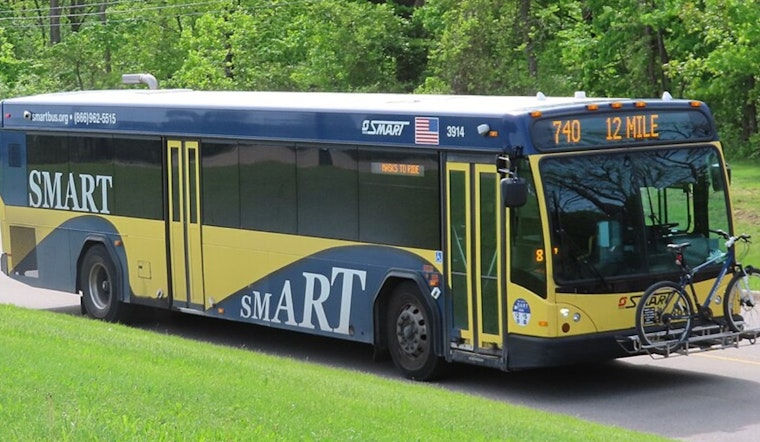
A new opposition group in Wayne County is gearing up for a fight over a planned SMART bus millage that will be on the August 4 ballot. The roughly one-mill property tax would, for the first time, require residents in previously exempt suburbs to help pay for expanded fixed-route and microtransit service. County officials and transit planners are already trading shots over ridership levels, pension liabilities, and who would actually ride the new routes.
Calling itself Not Smart Wayne, the coalition has launched a website, a petition, and a Detroit News op-ed urging voters to reject the renewal. The group’s materials, highlighted in coverage from The Detroit News, stress what they describe as low average loads and minimal fare revenue as proof that the system is not a good investment for taxpayers.
How the countywide vote got here
The Michigan Legislature removed the long-standing opt-out rule in late 2024, clearing the way for a single countywide transit question that includes municipalities that previously declined SMART service. That change moved forward as House Bill 6088 and was enacted in the lame-duck session, a step supporters say wipes out a major legal roadblock to more connected regional service. Those legislative changes and their impact were detailed by FOX 2 Detroit.
SMART’s plan and the numbers
SMART has posted a Wayne County service proposal stating that the millage question will be on the August 4 ballot and outlining route extensions, new crosstown service, and Flex microtransit pilots for suburbs that used to opt out. According to SMART’s Wayne County Service Proposal, the agency is pitching a mix of expanded fixed routes and on-demand service targeted at areas that currently have gaps.
The agency’s public materials and audited filings also show that fare revenue makes up only a relatively small share of total funding and that the system carries multi-million-dollar pension and OPEB obligations. Those revenue, fare, and liability figures, laid out in SMART’s audited FY24 report, are the financial backdrop for both the campaign messaging and the county’s outreach around the proposal, according to SMART’s FY24 financial report.
Opponents' math and the counterarguments
Not Smart Wayne leans heavily on SMART’s own numbers and a reported pension shortfall to argue that the one-mill levy would be a bad bargain. The group cites a pension gap in the tens of millions and repeatedly underscores that fares cover only a small slice of operating costs. That critique is laid out on Not Smart Wayne.
Transit advocates counter that countywide funding could finally plug long-standing service holes in fast-growing suburbs and strengthen connections to jobs, schools, and medical centers. They note that SMART’s evaluation framework focuses on phased, targeted investments rather than a blanket, one-size-fits-all expansion. That case is developed in analysis and advocacy by Transportation Riders United.
Politics and turnout
The August primary timing looms large. Primary-day ballots usually draw lower turnout than a November general election, which can amplify the clout of organized campaigns on both sides. Wayne County Executive Warren Evans has publicly backed the countywide approach and framed the change as part of a broader push to expand access to jobs and services. His comments and framing are summarized in the county’s State of the County materials, according to Charter County of Wayne Michigan.
What to watch
A heated summer campaign is likely. Opponents are expected to hammer away at tax calculations, fare recovery, and pension exposure. Supporters are poised to emphasize route maps, Flex pilots, and improved job access.
Key things to watch include turnout on August 4, whether SMART releases more detailed per-route cost and timing estimates, and how local leaders in newly included suburbs respond as outreach events ramp up. Town halls, public hearings, and targeted mail or digital campaigns are expected in the run-up to the vote.
Legal note
The opt-out repeal, moved through as HB 6088 and approved in the 2024 lame-duck session, eliminated the tool that had allowed many Wayne County communities to decline transit millages and shifted the decision to voters countywide. As a result, most legal battles are likely to focus on implementation details, ballot language, and rollout timetables rather than on whether the county can legally hold the vote at all. For a legislative summary and additional context, see House Democrats.





