

























































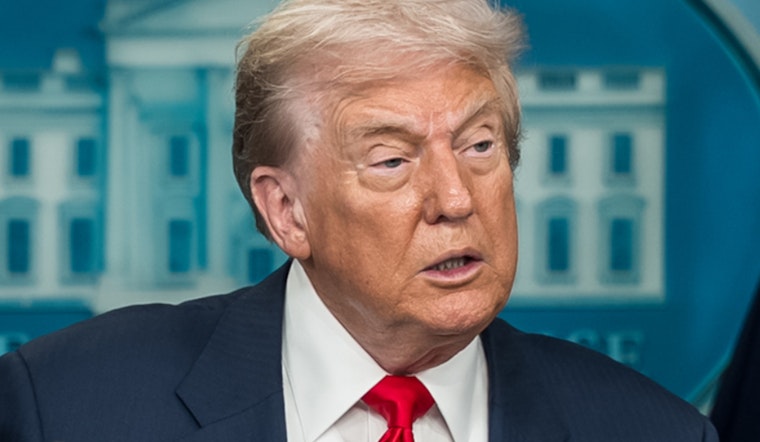
President Donald Trump has signed a sweeping new executive order that yokes immigration enforcement to the U.S. banking system, telling federal financial regulators to look for signs that people without lawful immigration status are opening accounts, taking out loans or otherwise tapping into U.S. financial services. Signed on May 19, 2026, the move casts immigration as a financial‑stability concern and puts regulators on a fast clock to produce guidance and potential rule changes for banks, credit unions and fintechs. Community lenders and immigrant advocates, already wary of how far immigration policy has seeped into everyday money matters, warn the move could further squeeze borrowers who depend on narrow, specialty products to get by.
What the order requires
The executive order, titled "Restoring Integrity to America’s Financial System," instructs the Treasury Department to issue an advisory within 60 days that lays out specific red flags for financial institutions to watch. It also tells federal banking regulators to consider changes to Bank Secrecy Act rules and customer‑identification requirements. As detailed by the White House, the order goes a step further by asking the Consumer Financial Protection Bureau to weigh clarifications to underwriting standards so lenders may factor in deportation and wage‑loss risks when assessing a borrower’s ability to repay. At the same time, the White House language repeats a familiar caveat: implementation must remain "consistent with applicable law" and is subject to available appropriations.
How this differs from earlier reports
The final order turned out narrower than the early leaks and draft language that had banks bracing for a paperwork shock. Those earlier versions suggested financial institutions would be required to collect customers' citizenship documents on the spot. According to reporting by The Associated Press, that more aggressive approach did not survive the drafting process. Industry pushback appears to have had an impact: Semafor reported that the White House moved away from a blanket documentation demand and instead ordered regulators and Treasury Secretary Scott Bessent to craft targeted guidance and potential rule changes.
Who could be affected
Policy researchers say the practical effects will likely be concentrated in more obscure corners of the mortgage and lending market, along with some immigrant tax recipients, rather than in the typical checking‑account line. The Urban Institute has estimated that in 2023 only about 5,000 to 6,000 mortgages went to borrowers using Individual Taxpayer Identification Numbers (ITINs), a relatively small slice of the market that could nevertheless see tighter underwriting if lenders begin weighing immigration status in credit decisions. That estimate comes from The Urban Institute. Legal analysts have also pointed out that the administration’s earlier efforts to reclassify certain refundable tax credits as federal public benefits could magnify the financial impact on some immigrant families, according to analysis from Hogan Lovells.
What banks and customers can expect
Banks and credit unions that sounded alarms over a universal citizenship‑paperwork rule can claim a partial win, but the final language still leaves them with significant new compliance homework. Regulators are now positioned to spell out risk indicators, require additional documentation when accounts are flagged and roll out supervisory guidance that could drive up operational costs. Community lenders and nonbank mortgage originators warn that even a few extra steps in documentation or underwriting can have an outsized chilling effect, discouraging households without traditional citizenship records from seeking loans or other services at all.
Legal questions and next steps
Veteran observers of this administration’s policymaking expect legal challenges to follow if agencies move quickly or aggressively on the new directive. Prior executive actions have repeatedly landed in court, with trackers logging dozens of lawsuits over rule‑making and enforcement priorities. That history suggests this order could be the next test case once regulators convert its broad language into concrete guidance or regulations. Just Security maintains a running catalog of the wave of challenges to related executive actions.
For customers and smaller lenders on the ground, the immediate takeaway is straightforward: if regulators identify risk factors that trigger enhanced due diligence, expect outreach from your bank or credit union looking for more information. And keep an eye out over the coming months for formal notices and proposed rules from Treasury and the federal banking agencies. With a tight timetable baked into the order, the policy is likely to move quickly from a political headline to a stack of draft regulations and public comment periods.




.jpg)