

























































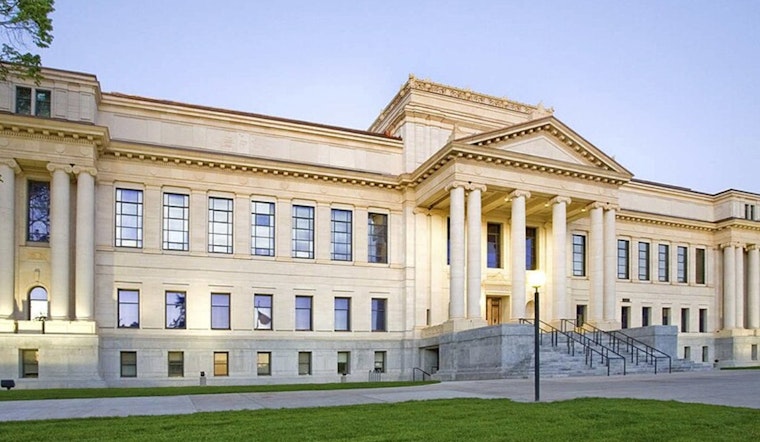
The University of Utah has locked in a three-year research partnership with the Department of Energy’s National Laboratory of the Rockies, aiming to speed up work on critical minerals, AI-enabled materials science, and workforce training that support U.S. supply chains. The agreement is designed to knit together campus labs, national lab facilities, and private industry on extraction, processing, and manufacturing research tied to batteries, semiconductors, and defense systems. State and federal players are already lining up funding and pilot projects in hopes of pushing promising lab discoveries toward commercial scale.
The memorandum of understanding was signed May 4 at the National Laboratory of the Rockies’ South Table Mountain campus in Golden, Colorado, where University of Utah President Taylor Randall and NLR Director Jud Virden put pen to paper on shared commitments for facilities, joint proposals, visiting-scholar programs, and student internships, according to the National Laboratory of the Rockies. Lab officials rolled out the MOUs around NLR’s Partner Forum, where Department of Energy representatives stressed the need to scale domestic critical-mineral capabilities. University research leaders, state energy officials, and industry partners at the signing framed the deal as a move toward building an end-to-end Rocky Mountain supply chain.
What the agreement covers
The three-year pact focuses on critical minerals research, water security, advanced manufacturing and high-performance computing, areas both institutions say are central to national energy resilience, according to KSL. It opens the door for researchers to share lab space and equipment, coordinate funding proposals and push promising bench-scale projects toward demonstration and commercialization. Leaders from the university and the lab also cast the collaboration as a very practical boost for student internships and career pipelines into national labs and related industries.
How it fits Utah’s statewide push
The memorandum lines up with the University of Utah’s plan for an Institute for Critical and Strategic Minerals, a board-approved initiative from April 14 that is still awaiting final sign-off from the Utah Board of Higher Education, according to the university. Gov. Spencer Cox’s "Mission Critical" framework and recent state legislation have set aggressive goals for expanding domestic extraction and processing, giving the partnership both political momentum and a clear state policy backdrop, as reported by the Deseret News.
Federal funding and research next steps
The agreement, led by a University of Utah-led research team that includes the Colorado School of Mines, has secured about $9.6 million from the Department of Energy to characterize critical minerals from unconventional sources, including legacy coal mines across the Rocky Mountain region, according to University of Utah communications. That CORE-CM funding, paired with the new partnership, is expected to feed follow-on demonstration projects, larger DOE proposals, and private investment to test recovery and processing techniques at scale. University materials say the proposed Institute for Critical and Strategic Minerals would help channel those efforts into degree programs, workforce training and applied research collaborations.
Why the Rockies matter
Officials at the lab and the Colorado School of Mines say Golden is quickly turning into a critical minerals scale-up hub, with planned facilities such as NLR’s Energy Materials and Processing at Scale (EMAPS) and Mines’ Critical Minerals Innovation and Commercialization Hub set up for pilot-scale testing and manufacturing, according to the Colorado School of Mines. The MOUs are structured to connect Colorado's hardware and know-how with Utah’s geology and talent pipeline so that promising processes can move from sample analysis to pilot plants more quickly. Lab and university leaders argued that coordinated facilities, student internships, and joint proposals offer the most direct path to cutting reliance on foreign processors and refining capacity.
Next steps and local impacts
The Institute for Critical and Strategic Minerals still needs final approval from the Utah Board of Higher Education, so the near-term work will center on governance, program priorities, and lining up demonstration projects that can pull in more federal grants, the university said. Lawmakers, industry supporters, and local communities are expected to watch permitting timelines and workforce plans closely as the state tries to convert research dollars into processing plants and jobs, a push backed by recent legislation and Gov. Cox’s Mission Critical initiative. If approvals and funding come together, Utah and its Rocky Mountain partners could serve as a real-world testbed for U.S. critical minerals independence.





