

























































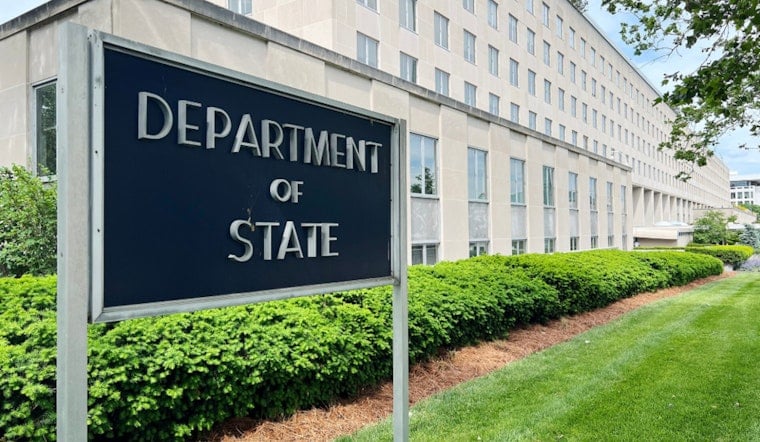
The U.S. State Department on Thursday formally labeled two of Brazil’s most powerful crime syndicates, Primeiro Comando da Capital (PCC) and Comando Vermelho (CV), as Foreign Terrorist Organizations. The designation, which takes effect June 5, unlocks an arsenal of U.S. criminal and financial tools aimed at disrupting their networks and is being framed as part of a stepped up "narco-terror" strategy targeting transnational trafficking and money-laundering routes.
The move follows months of pressure from U.S. officials and hard-line Brazilian politicians who had urged Washington to escalate against the gangs, while President Luiz Inácio Lula da Silva’s government resisted branding them as terrorists, according to reporting from the AP. Experts cited by AP estimate the PCC and CV together count tens of thousands of members, and the decision is expected to reverberate through Brazil’s already polarized presidential landscape.
What the designation does
Being listed as a Foreign Terrorist Organization carries serious legal consequences. U.S. persons are generally required to block or report assets tied to the designated groups, and it becomes a federal crime to knowingly provide them with "material support," as outlined by the Congressional Research Service. The FTO label also gives prosecutors additional leverage in charging leaders, operatives and facilitators.
The U.S. Treasury Department, for its part, now has a wider lane to use asset blocking and targeted sanctions, tools it has already relied on in past narco-terror cases. Those same financial pressure tactics are expected to be part of the enforcement mix once the designation kicks in, according to the Treasury.
Why the U.S. moved now
U.S. officials and outside analysts say the PCC and CV have evolved well beyond their prison-gang roots, expanding into cross-border drug trafficking, money laundering and infiltration of legitimate businesses. Washington argues that kind of regional footprint requires stronger legal levers than traditional organized-crime tools alone.
Legal and compliance specialists warn the designation is designed to choke off revenue streams and simplify the path for U.S. prosecutors to go after not just gang bosses but also fixers, financiers and logisticians. Those risks, and the potential exposure for companies, are laid out in analysis by Paul Hastings.
Precedent and enforcement tools
This is not Washington’s first swing at Latin American criminal networks using terrorism-linked authorities. Previous U.S. actions against cartels and transnational gangs have combined sanctions by the Office of Foreign Assets Control with criminal indictments and, in some cases, extraditions to U.S. courts.
Recent operations by the Treasury show how asset freezes and related financial measures are used to squeeze cross-border criminal groups. On the law-enforcement side, the DOJ has highlighted cases in which indictments and international cooperation, including extradition, are deployed in tandem with those financial tools.
What it means at home
For U.S. banks and companies with exposure to Brazil, the designation is likely to trigger a fresh round of compliance checkups. Financial institutions that touch the dollar system can expect higher due-diligence costs and more complicated transaction monitoring, especially where counterparties might intersect with Brazilian high-risk sectors.
Analysts caution that correspondent-banking ties, trade finance arrangements and firms operating in vulnerable areas such as real estate, logistics, fuel distribution and fintech could feel the impact almost immediately, as laid out in policy analysis from Americas Quarterly.
Political fallout in Brazil
Diplomatically and domestically, the U.S. move lands in the middle of Brazil’s ongoing political tug-of-war. Allies of former President Jair Bolsonaro have cheered the decision as proof that the gangs represent a global security threat, while President Lula’s aides argue the label risks infringing on Brazilian sovereignty and could carry economic downsides, according to the AP. The step is expected to fuel debate in Brasília over whether the terrorism tag helps or hinders Brazil’s own policing and judicial strategies.
Bottom line: with the June 5 effective date approaching, U.S. authorities have a short runway to act on known networks, and private-sector players have limited time to tighten their controls. The designation is both a legal weapon and a political signal, one that is set to reshape enforcement, banking compliance and campaign rhetoric on both sides of the hemisphere in the weeks ahead.





