

























































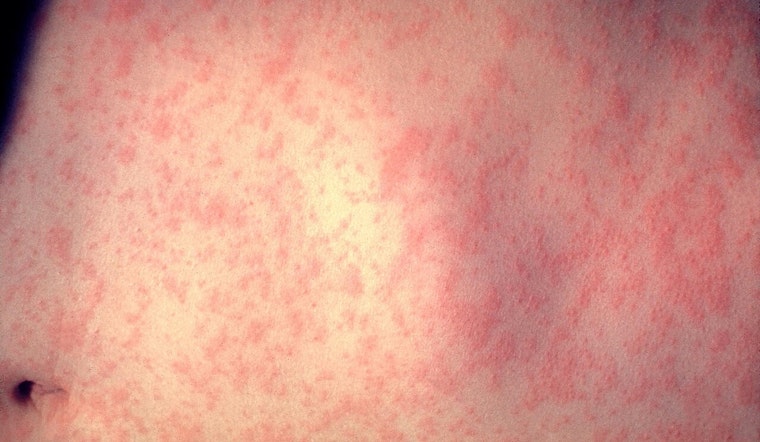
The first measles case of 2026 has officially landed in Travis County, with Austin Public Health confirming on May 7 that an unvaccinated adult brought the virus home after a trip abroad. The person later sought care in north Austin, triggering contact tracing and a round of public health alerts.
What Officials Are Saying
Austin Public Health says the patient is a man who visited the St. David’s emergency center off U.S. 183 near Anderson Mill Road on May 4 during a lunchtime window. Health staff are now working through the list of people who may have been in close contact with him. According to KVUE, the man was not vaccinated, and health investigators are following standard exposure-notification procedures.
Symptoms, Incubation, and Risk
Measles typically starts off looking a lot like a bad cold: fever, cough, runny nose, and red, watery eyes. That is usually followed by the classic measles rash. Symptoms generally appear about 7–14 days after exposure, and a person can spread the virus before the rash ever shows up. The virus is highly contagious and can hang in the air and on surfaces for up to two hours. Two doses of a measles-containing vaccine provide roughly 97% protection against clinical measles, according to the CDC.
Local Response and Statewide Context
Austin Public Health is asking anyone who was at the St. David’s emergency center during the May 4 timeframe to keep an eye out for symptoms, stay home, isolate if they become sick, and call their health care provider for guidance. The agency also maintains information on vaccine clinics and what to do after a possible exposure, according to Austin Public Health.
This local case arrives as measles continues to surface elsewhere in Texas this spring, and more than 140 cases have been reported statewide, many of them linked to federal detention facilities, according to The Texas Tribune.
If you think you may have been exposed, call your doctor before showing up in person, and steer clear of people who are pregnant, very young, or immunocompromised. Vaccination remains the strongest line of defense, so check your records, and if you are not sure about your status, talk with your provider about getting the MMR shot.





