

























































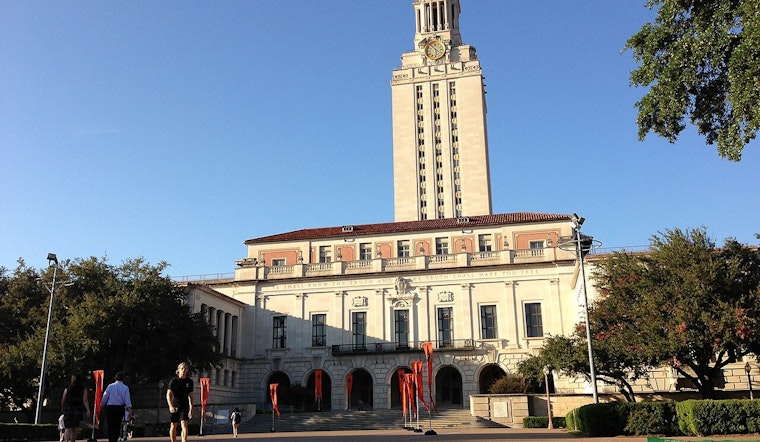
Next week, a federal courtroom in downtown Austin turns into the latest battleground over campus speech, as a former University of Texas student tries to wipe a protest-related suspension off his record in a closely watched First Amendment fight.
Former student Ammer Qaddumi is asking a judge to erase a three-semester suspension and related disciplinary sanctions that followed his April 24, 2024 arrest at a pro-Palestinian protest on UT’s South Mall. The case will be decided in a short bench trial, with no jury, that puts the university’s protest policing and discipline squarely under federal scrutiny.
According to the Houston Chronicle, U.S. District Judge Robert Pitman will preside over the proceedings starting Monday and is expected to rule on whether UT’s handling of Qaddumi’s case crossed the line into viewpoint discrimination or retaliation. The non-jury trial is slated to run through Wednesday.
Court filings show Pitman rejected UT’s bid for summary judgment in April, finding that factual disputes had to be sorted out at trial, per Leagle. That ruling kept alive the possibility that, if Pitman finds unlawful viewpoint discrimination or retaliation, he could order the suspension stripped from Qaddumi’s academic record.
Qaddumi was one of roughly 57 people arrested when campus police and state troopers moved in on the April 24 protest, coverage from the Austin American-Statesman shows. The Travis County attorney later declined to pursue criminal trespass charges, saying probable-cause affidavits were deficient. The arrests and UT’s disciplinary fallout have since sparked multiple lawsuits and faculty complaints.
What the case challenges
In his lawsuit, Qaddumi says he had volunteered as a mediator during a dispersal order and was arrested while relaying police instructions to other protesters, according to KUT. A student conduct panel initially recommended a deferred suspension and an ethical decision-making course. A university appellate officer later overturned that and reinstated a full three-semester suspension that took effect in August 2024.
Qaddumi is asking the court to scrub the suspension from his permanent academic record and to award damages for what he alleges were violations of his constitutional rights. The trial will probe not only what happened on the South Mall that day, but also how UT interpreted its own rules when it decided to escalate the penalty.
University's defense
UT maintains it did not target protected speech and says it was simply enforcing campus rules, according to court filings summarized on Justia. Interim President James E. Davis is named as the defendant in place of former president Jay Hartzell.
The university argues its response was aimed at preventing disruption, not shutting down a particular political viewpoint. In court, its lawyers will be trying to convince Pitman that the discipline stemmed from specific conduct, not from Qaddumi’s role in a pro-Palestinian demonstration.
Why the outcome matters
Legal observers say the ruling could shape how public universities across Texas, and potentially beyond, handle student protests: where they draw the line between enforcing time, place and manner rules and engaging in viewpoint discrimination. That broader fight over campus protest policing has been tracked by Texas Tribune coverage of the case and its fallout.
The April 2024 protests at UT also helped spur state-level responses and policy shifts that have sharpened scrutiny on how universities use police, dispersal orders, and disciplinary tools when demonstrations get tense.
For now, the focus is on one student and one suspension. The bench trial is set to open at 8:30 a.m. Monday in Courtroom 4 of the federal courthouse on West Fifth Street in Austin and is expected to wrap by Wednesday, the Houston Chronicle reports. If Pitman sides with Qaddumi, the ruling could trigger immediate changes to his academic record and send a pointed message about how UT and other public institutions handle protest discipline going forward.





