

























































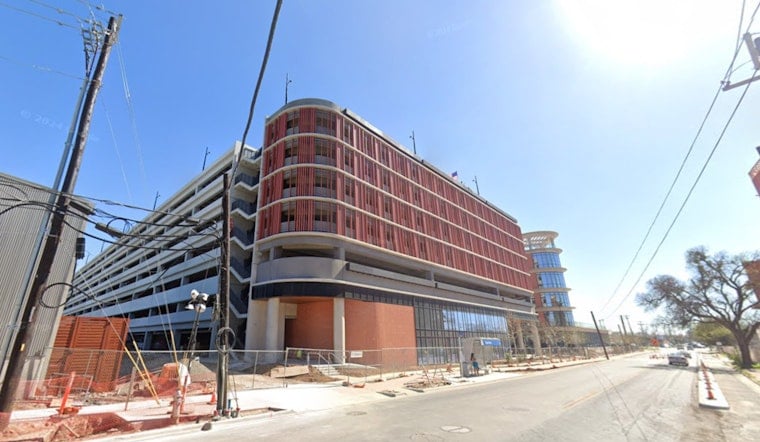
A sprawling 881,000-square-foot office campus in East Austin has sat completely empty for nine months, its pickleball courts, yoga deck, and native wildflower meadow all waiting for workers who have yet to arrive. Springdale Green, developed by Jay Paul Company near the intersection of Airport Boulevard and Springdale Road, was completed in October 2025 on a 30-acre site that was once one of the most contaminated pieces of land in the city.
The scale of the vacancy is striking given the scope of the project. As reported by The Austin Chronicle, the campus spans two mid-rise buildings with a combined 881,000 square feet of office space, more floor area than downtown's Frost Bank Tower. The property includes a basketball court, a fitness center, a parking garage, and what marketing materials describe as part backyard, part conference room, part social lounge, according to the Chronicle's reporting.
A Toxic Past Made Housing Impossible
The land beneath Springdale Green carries a heavy industrial history. From 1948 until its closure in 1993, the 52-acre East Austin Tank Farm at this same corridor stored more than 10 million gallons of toxic petroleum products across facilities run by six major oil companies, according to ArcGIS StoryMaps. The facility operated adjacent to residential neighborhoods and within a mile of seven schools. The Chronicle reports the former tank farm stored crude oil and gasoline for decades beginning in the 1950s and caused contamination across large stretches of East Austin land.
That contamination didn't disappear quietly. Grassroots environmental justice organization PODER and local activists organized toxic tours and community protests between 1991 and 1993 to expose air and groundwater pollution, ultimately forcing the oil companies to shut the tank farm down and begin remediation, per the Austin Monitor. That fight remains a foundational victory for East Austin environmental justice advocates, the outlet notes.
The cleanup left a legal scar that still shapes what can be built there. State environmental deed restrictions established during the 1990s remediation prohibited future residential use on the former tank farm property, according to TOWERS, leaving commercial or light industrial development as essentially the only viable options for reusing the site. Jay Paul Company purchased land affected by invasive species and chronic flooding, per the Chronicle, and the site still sits within a 500-year floodplain.
Green Design, Empty Floors
Whatever else has gone wrong commercially, the ecological transformation is real. Jay Paul Company and landscape architecture firm DWG restored native species and rehabilitated contaminated soil on the site, and mitigated flooding through stormwater management, the Chronicle reports. The campus earned both LEED Gold certification and Sustainable Sites Gold certification, and it includes a native wildflower meadow, an elevated boardwalk, acres of usable green space, and a 650,000-gallon stormwater irrigation system.
Local Austin firm The Geyser Group originally assembled the two primary land parcels at 1011 and 1017 Springdale Road and guided the site plan through city approvals before selling the project to the California-based Jay Paul Company, according to The Geyser Group. Austin City Council approved a Planned Unit Development rezoning for the site in 2021, raising maximum building heights from 60 feet to 93 feet in exchange for an $8 million community benefits package and extensive flood mitigation, per reporting on the project. That package included property tax relief assistance for neighborhood residents.
A Market That Moved On
The trouble is that Springdale Green was built for a moment in Austin's office market that may have already passed. The Chronicle reports the Austin office market is now saturated with more available inventory than renters, with citywide vacancy sitting around 24.2 percent, per Avison Young. In East Austin specifically, that vacancy rate climbs to 36 percent, according to the same Avison Young figures cited by the Chronicle.
Ariel Guerrero of Avison Young told the Chronicle that demand is shifting toward smaller companies that need less office space, and that there's a gap between the original development expectation and actual tenant behavior. Technology companies drove Austin office development for years, but fully remote or hybrid employees have accounted for around 22 percent of the workforce nationally over the past two years, per the Chronicle's reporting. Jay Paul Company, which initially targeted large single-occupant tech firms, has since pivoted to offering single-floor split leases to accommodate smaller tenants, a shift the Chronicle frames as part of a broader move away from mega-tenant office leases.
Mandy Pope of the University of Texas-Austin Real Estate Center said remote work contributed to Austin's office vacancies, and suggested Springdale Green may simply be ahead of market demand. Not every signal points downward, though: the Chronicle notes that Austin office vacancy has dropped 19.6 percent this year, that Class-A buildings have the highest absorption rates across the city, and that Austin companies are making a return to the office. Downtown Austin's weekly foot traffic is now at 93 percent of its pre-pandemic level, according to the Downtown Austin Alliance. Jay Paul Company is actively leasing Springdale Green, according to the Chronicle, but the company did not respond to the outlet's specific questions about the development.
Neighbors Watch and Wait
For residents nearby, the empty campus is now just part of the landscape. JP Pifer, who has lived on Saucedo Street since 2021, supports the wetland and savannah rehabilitation work done at Springdale Green even as the buildings themselves sit unused. The campus now sits dormant among service stations, strip malls, condo buildings, and coffee shops that make up the surrounding East Austin corridor, per the Chronicle's description of the site.
Springdale Green isn't an isolated project in the area. It sits near the arts-focused Springdale General campus that opened in 2018 and The Goodwin, a 363-unit apartment complex, according to Community Impact, part of a broader shift in the corridor away from industrial uses and toward creative office and multifamily development. Whether Springdale Green's own transformation from toxic tank farm to vacant green campus ends in a similar success remains, for now, an open question.





