

























































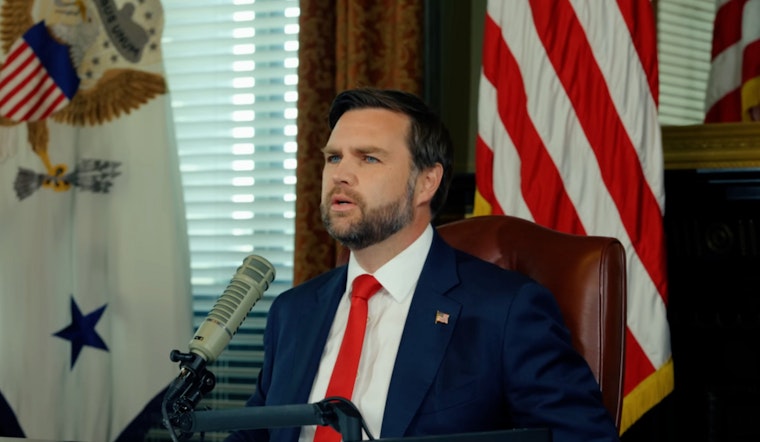
Vice President J.D. Vance pulled more than a dozen Republican state attorneys general into the Eisenhower Executive Office Building on Tuesday for a White House meeting centered on a sweeping anti-fraud push and early enforcement wins. Several Democratic attorneys general said they would not show up, describing the invite as a last-minute request with no public agenda, which left the room largely to Republican state officials and federal enforcement leaders. The gathering combined enforcement tallies, fresh Justice Department resources, and a call for tougher state-level prosecutions in the middle of a partisan fight over how to police federal benefit programs.
Roundtable Draws GOP Crowd, Democratic Skepticism
The White House pitched the event as a federal-state strategy session to spot fraud faster and move investigations more quickly, and it was expected to feature more than a dozen Republican attorneys general while Democrats kept their distance. As Politico reported, critics in Democratic offices argued that the short notice and lack of a clear agenda undercut any promise of real collaboration and led them to hold a separate virtual news briefing instead.
Vance used the meeting to run through a now-familiar set of task force numbers, including a Small Business Administration referral of roughly $22.2 billion in pandemic-era loans to the Treasury Department for collections and a group of Medicaid and student-aid enforcement efforts that the White House says protected taxpayer dollars and program integrity. The SBA has cast the April referral as the largest in its history, and local coverage has relayed Vance’s description of billions in flagged contracts and blocked attempts at student-aid fraud. According to the SBA, the findings stretch across loans, contracts and benefit programs.
DOJ Ramps Up Prosecutions With New Cash
The Justice Department has backed the effort with money of its own. On April 22, DOJ announced a $300 million Special Attorneys Program to support state, local and tribal prosecutors who can be detailed into federal fraud work and to boost overall prosecutorial capacity, according to a department news release. Colin McDonald, the recently confirmed Assistant Attorney General leading the new National Fraud Enforcement Division, has framed the program as a way to coordinate multi-jurisdiction cases and bring more prosecutors to complicated fraud investigations. Justice Department
Political Blowback And Talk Of Pressure
Democratic state officials responded quickly, criticizing the timing and structure of the White House session and arguing that fraud enforcement should be walled off from partisan pressure. As NBC News reported, New York Attorney General Letitia James and other Democrats held a virtual briefing where they said the invitation arrived too late and with too little clarity about how cases would be selected or coordinated with federal partners.
Ohio Spotlight And State-Level Stakes
The meeting carries particular weight in Ohio, Vance’s home state, where officials are already examining reports of irregularities in Medicaid billing and political leaders are watching how federal moves could ripple through state programs. Gov. Mike DeWine has tapped Andy Wilson to become Ohio attorney general next month, and Cleveland outlets have highlighted state investigations that line up with the task force’s priorities. Cleveland.com
What To Watch Next
Observers are looking for more interagency referrals, stepped-up civil collection work and potential criminal cases as the National Fraud Enforcement Division and its state partners put the new grants and data-sharing tools to use. Supporters say the mix of SBA referrals, DOJ funding and coordinated state participation should help the government recover stolen funds more quickly. Critics caution that the effort could politicize enforcement and rely on blunt tools, such as funding holds or aggressive audits, that might strain cooperation between federal and state officials. Justice Department




