

























































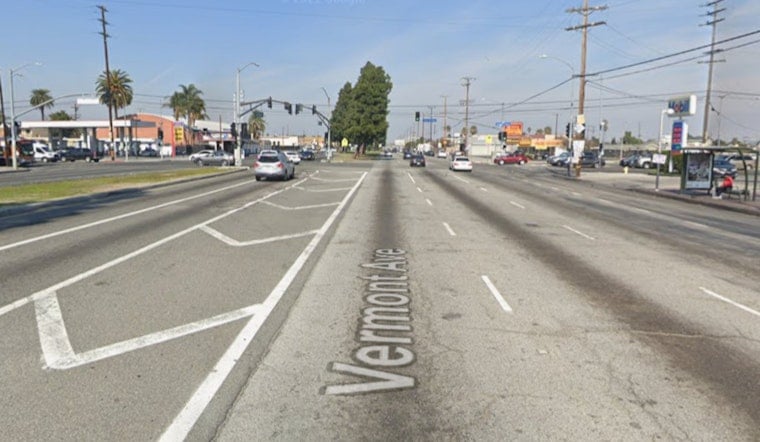
After years of planning and debate, crews are finally about to start preconstruction work on the long-awaited Vermont Avenue Bus Rapid Transit project, turning Los Angeles County's busiest bus corridor into an active job site. Starting next week, Metro and its partners will roll out small exploratory digs to locate underground utilities along the roughly 12-mile corridor from Hollywood Boulevard in Los Feliz down to 120th Street near unincorporated Athens. The build is meant to shorten long cross-city bus trips and add upgraded stations ahead of the 2028 Olympics.
A construction notice from Metro says crews are scheduled to begin searching for existing underground utilities as early as Tuesday, May 11, 2026. Those first efforts will be limited to small, targeted digs to find pipes and cables, with heavier excavation and roadway reconstruction to come later in the year as the project moves out of the preconstruction phase.
Design, money and pre-construction contracting
Metro's board has approved a Construction Manager/General Contractor preconstruction contract, authorizing roughly $4.79 million to Griffith Company and establishing a preconstruction budget of about $198.46 million to get work rolling. According to a board report from Metro, the plan calls for a side-running BRT line with 13 station locations for a total of 26 stops, along with transit-signal priority, all-door boarding and zero-emission buses. Staff estimate those design features would cut end-to-end travel times by roughly 24 percent, or about a 17-minute savings.
What the numbers mean for riders
Metro materials put current corridor boardings at roughly 36,000 daily trips, and the agency projects that dedicated lanes could boost ridership to about 66,000 daily, with more than 12,000 of those riders new to Metro. End-to-end bus travel times on Vermont could fall from roughly 70 minutes to about 53 minutes, according to Urbanize LA. A project profile from the Federal Transit Administration describes the Vermont Avenue BRT as an all-day, side-running line targeted to begin service around 2028, in time for the Olympic and Paralympic Games.
Construction effects on the street and parking
Neighbors along Vermont should expect targeted utility potholing, short-term lane restrictions and temporary curb modifications as preconstruction work gives way to heavier activity later in 2026. The project page from Metro notes that side-running lanes were chosen in part to preserve most on-street parking, although some stretches of Vermont will see new time-of-day parking rules and temporary disruptions during station and lane construction. Metro says the new bus lanes will support both Metro and local services, and can be shared with bicyclists when it is safe to do so.
Long term: rail remains a distant possibility
Transportation planners have long eyed Vermont Avenue as a potential heavy-rail corridor, with studies suggesting a subway or light-rail conversion could carry as many as 144,000 daily riders. Even so, Urbanize LA reports that Metro's own estimates push funding for any rail build into the very long term, around 2067, making BRT the practical upgrade riders can expect in the near future.
Residents and riders can expect more neighborhood construction notices, localized traffic changes and outreach from the CM/GC team as preconstruction unfolds through spring and summer. If the schedule holds, the first BRT service should roll out ahead of the 2028 games, with curbspace and stop patterns along a broad stretch of central Los Angeles gradually reshaped in the years leading up to opening day.



