

























































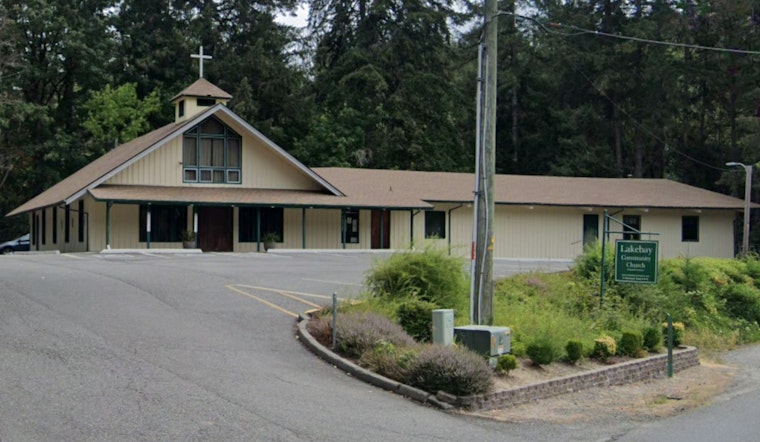
Neighbors on the Key Peninsula got an unexpected visitor Monday afternoon when a black bear was caught on video roaming through the ferns near Lakebay Community Church on Cornwall Road SW.
The short clips, shared to a local Key Peninsula Facebook group, show the bear ambling along a wooded edge just off the church property. The sighting lines up with a seasonal trend: black bears get more active in spring, and Lakebay residents have been posting similar encounters across social media.
According to The News Tribune, the videos were posted around 2:20 p.m. and again shortly after 3 p.m. Key Peninsula Fire Department spokesperson Anne Nesbit told the paper the department had not received official calls about a bear, even as “sightings all over Facebook” kept popping up. The outlet also reported that the Washington Department of Fish and Wildlife (WDFW) incident map did not list a new Key Peninsula entry for Monday; the most recent report on the peninsula was April 26 in the Longbranch area.
What wildlife officials are saying
In an email to The News Tribune, WDFW spokesperson Bridget Mire said the agency has received multiple reports of black bear sightings on the Key Peninsula this spring and last fall.
"When preparing for hibernation in the fall and after waking in the spring, bears look for high-calorie, easy-to-find food sources," Mire wrote, stressing that once bears discover human food, they tend to keep coming back for seconds. Officials say the most effective way to avoid encore visits is to cut off those easy meals around homes and yards.
How to reduce bear attractants
The Washington Department of Fish and Wildlife urges residents to lock up garbage and recycling until pickup day, remove bird feeders, scrub and store barbecue grills after use, and feed pets indoors or only briefly outside. Those simple moves, they say, can make your property a lot less interesting to a hungry bear.
WDFW also notes that new black bear reports may take up to 10 days to show up on its predatory-wildlife incident map, so the public map can lag behind what people are actually seeing in their neighborhoods. Bears that get comfortable eating human food can become a public-safety problem, and the agency warns they may ultimately face enforcement action or removal if conflicts keep happening.
If you run into a bear that seems aggressive or looks like a clear threat to public safety, officials say to call 911. For non-emergencies, WDFW asks residents to report sightings at 877-933-9847 or through the agency’s online incident form, available via the Washington Department of Fish and Wildlife. Residents posting videos or photos to neighborhood pages are also reminded to keep their distance, skip the selfies, and never try to approach, feed or move wildlife, instead following WDFW guidance to head off repeat visits.




