

























































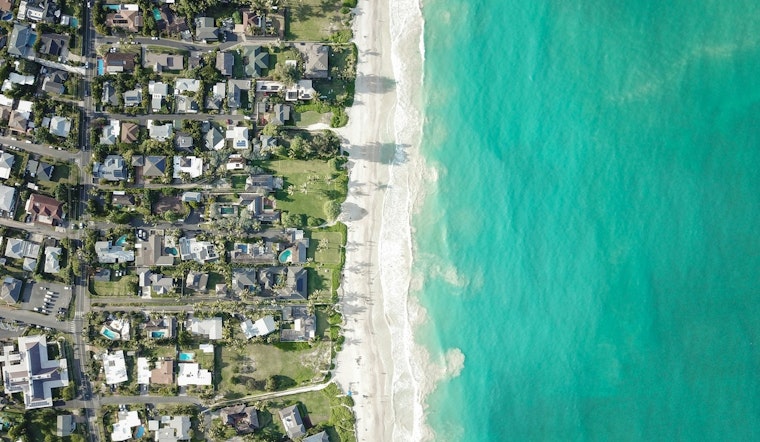
Hawaii’s housing market is still punishingly expensive and painfully short on places to live. Locals are weighing whether to leave the islands, move in with relatives, or push their budgets way past comfortable. On paper, state economists say the fix sounds straightforward: build a lot more homes and approve them faster. In practice, that means wading into a swamp of long permit lines, touchy politics, and condo fees that just will not quit.
Key findings from the factbook
The University of Hawaiʻi Economic Research Organization’s latest housing factbook spells out the stakes. In 2024, the median single-family home sale was about $950,000, while the median condo ran roughly $600,000, leaving fewer than one in four households able to afford a typical single-family mortgage, according to UHERO. The report warns that “low housing supply, coupled with strong demand, has fueled the state’s deep and persistent housing crisis.” Those same dynamics, the authors say, help explain why home sales are hovering near multi-decade lows even as high-income buyers keep pushing prices higher.
Permitting and public projects
Slow permitting comes in as one of the biggest choke points. Median processing times run about three times the national average, with single-family permits taking roughly 172 days on Hawaiʻi County and up to 393 days in Honolulu. Multifamily approvals stretch from about 300 to 554 days in some counties, according to UHERO. The factbook highlights large public projects, including the Ka Lei Momi plan that could add nearly 11,000 units over the next decade, as evidence that supply can grow if approvals and financing move more quickly. Economists argue that trimming red tape and boosting county capacity are among the fastest, lowest-cost ways to get new homes into the pipeline.
Condo owners are feeling the pinch
Condominiums have long been seen as the “affordable” way into ownership in Hawaii, but that reputation is slipping as association fees spike. Local reporting that dug into UHERO’s numbers found that Hawaii’s average HOA fees were already among the nation’s highest, and that a significant share of listed condos saw fee hikes in early 2025, according to Civil Beat. Television coverage adds that more than 42% of Hawaiʻi homeowners report paying monthly HOA fees, a cost that eats into condo affordability for buyers who are already pushing the limits of their mortgages and incomes, as reported by KHON2.
Policy trade‑offs and political reality
UHERO’s analysis is clear on one thing: there is no single silver bullet. Policies that try to free up existing units, such as tighter rules on short-term rentals or vacancy taxes, can nudge more homes into the long-term market but may also chip away at tourist dollars and tax revenues that pay for local services. For example, UHERO found that phasing out certain vacation rentals in Maui could return roughly 6,000 units to long-term housing, but at the cost of potentially large drops in visitor spending. Local coverage has underscored those trade-offs, as Maui Now reports. Supporters say the risks are worth it if the measures protect renters and workers who live in Hawaii year-round, while critics warn of job losses and revenue hits if changes are not phased in carefully.
What comes next
Not everyone, however, thinks Hawaii is locked into runaway housing inflation. University economists and local real-estate analysts point out that home prices have leveled off in recent years and that rent growth has been more modest than headline numbers sometimes suggest. Trey Gordner told KHON2 that home prices have “stabilized” and that rents are rising “but pretty modestly” once broader inflation is factored in. For policymakers, the short-term playbook is relatively straightforward, even if the politics are not: speed up permitting, protect the stock of long-term rentals, and target public investment where it can add units quickly. Turning that checklist into concrete projects, though, will mean confronting some very hard choices about what kind of housing market Hawaii is willing to live with.





