

























































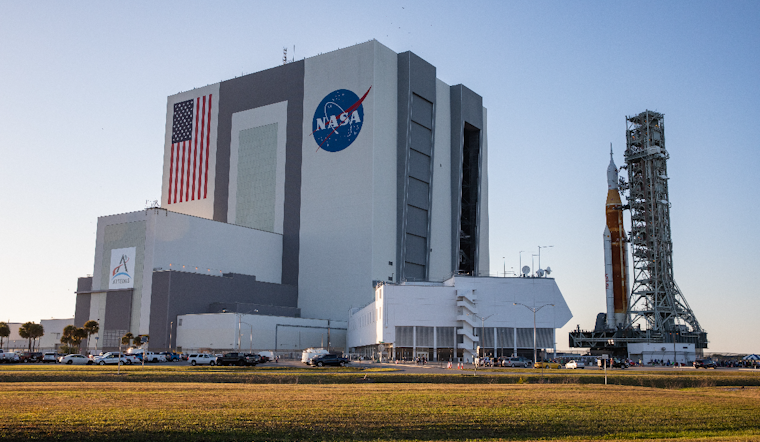
Massive solid-rocket booster pieces for NASA’s Artemis III mission are rolling into Florida, shifting the tempo at Kennedy Space Center from factory floor to launch-pad prep. The hardware deliveries mark a visible step toward stacking the moon rocket inside the Vehicle Assembly Building, even as NASA and its contractors work through program ripples from a recent commercial pad accident on the Space Coast. Together, the incoming booster segments and ongoing inspections are putting real momentum behind a mission slated to move into flight preparations next year.
Final motor segments leave Utah
Northrop Grumman has shipped the last set of solid-rocket motor segments out of its Utah railyard this week, closing out the final rail move needed to complete the Artemis III booster stack, according to a recent report. In a press release on the freight move, Union Pacific said the components departed Corinne, Utah, behind its commemorative locomotive No. 4547 as the train headed toward Kennedy Space Center.
What the boosters do and where they fit
The newly arrived segments will join earlier deliveries to form a pair of five-segment solid rocket boosters that strap to the Space Launch System core and help generate roughly 8.8 million pounds of liftoff thrust, per NASA. Local coverage has followed the rail movements into early June as the booster parts roll into inspection and processing flows at Kennedy, according to the Orlando Sentinel.
How the parts crossed the country
The booster hardware traveled on specialized rail cars with an escorted freight route from northern Utah to the Space Coast, a familiar logistics playbook for oversized rocket components. Union Pacific’s announcement noted that commemorative locomotive No. 4547 was making its first freight run hauling Artemis III hardware and highlighted the multi-state journey that brought the segments to Kennedy for processing.
Where Artemis III stands in the schedule
At Kennedy, teams already have major pieces on site. The SLS core stage rolled into Florida earlier this spring, and crews have been preparing flight hardware for integration inside the VAB, according to reporting from Boeing and NASA. With the last booster segments showing up, NASA and its contractors are aiming to start booster stacking operations at Kennedy later this year as the agency works through a string of Artemis III mission milestones.
Blue Origin mishap and program implications
The booster arrivals are unfolding in the shadow of Blue Origin’s New Glenn accident during a May 28 hot-fire test at Cape Canaveral’s Launch Complex 36, an event that destroyed the test vehicle, damaged pad infrastructure, and stirred questions about near-term commercial support for lunar landers. National outlets have chronicled the explosion and its aftermath, and the blast has already triggered investigations and repair planning. NASA Administrator Jared Isaacman has said the agency will back a full investigation and send in subject-matter experts to help with assessments and recovery, the Orlando Sentinel reports, even as NASA keeps lander development on a parallel track with launch-vehicle processing.
What’s next for Kennedy
For Kennedy crews, the near-term to-do list is all about inspection and processing, detailed checklists that lead into stacking, testing, and a series of integrated rehearsals before the rocket ever rolls out to the pad. The booster shipments clear a key material hurdle for SLS preparations and give engineers tangible hardware to work with as program managers juggle schedules, investigations, and commercial partner timelines on the road to 2027.



