

























































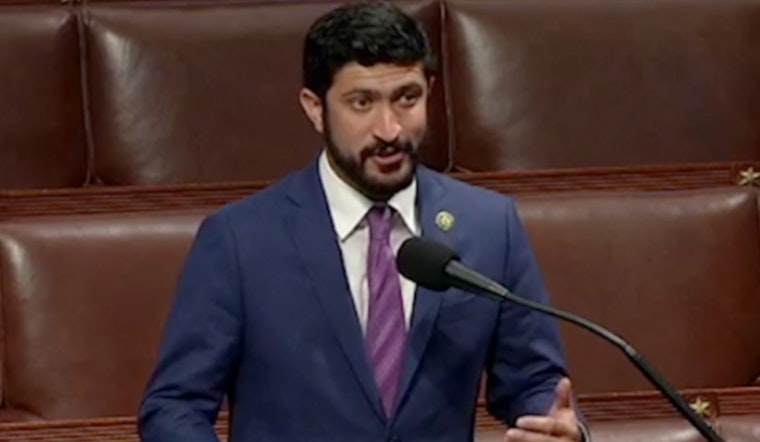
Rep. Greg Casar is rolling out a big idea in Washington: tax artificial intelligence companies and use the cash to put people back to work. His new proposal would make AI providers pay a fee based on how much their systems are used, counting both the tokens they process and the computing power needed to train and run the models. The revenue would fund a national jobs program modeled on the old WPA-style initiatives, focused on workers pushed out by automation. Casar is pitching the plan as an urgent way to head off mass layoffs and keep communities from getting left behind, and it is already sparking arguments from Austin to the Capitol.
In an op-ed for The American Prospect, Casar warned that "AI is coming for your job" and pressed Congress to go after AI providers, not individual users, for the tax bill. He calls for the money to support both retraining programs and direct public hiring. The piece also lays out a sliding scale, where large corporate users would face higher rates and the tax could be adjusted if AI adoption speeds up.
How the proposed levy would work
Casar describes the tax as a two-part meter. One part tracks the number of tokens an AI model processes, and the other tracks the amount of compute power used to train and operate it. As he explains in the op-ed, tying the fee to usage would let revenue rise along with AI uptake, with the funds split between efforts meant to slow job loss and initiatives that actively create new work. The American Prospect notes that he imagines scaled rates, so major enterprise deployments would pay more than small or individual tools.
Voter concern in Texas
A University of Texas/Texas Politics Project poll conducted April 10–20 found that 43% of registered Texas voters said they were "very concerned" about AI's impact on jobs and another 32% were "somewhat concerned." That level of anxiety helps explain why a Texas congressman based in the Austin area would make worker protections the centerpiece of a national AI tax proposal, according to the Texas Politics Project.
Where the job market stands
The broader labor picture is not exactly calm. The Federal Reserve Bank of New York's interactive report on recent college graduates shows that unemployment for people ages 22–27 hovered around 5.7% in the first quarter of 2026. Casar and his allies point to that strain, and to signs that entry-level rungs for younger workers have tightened, as justification for front-loading job creation instead of relying only on retraining after people are already displaced, per the New York Fed.
What "tokens" are - and the pushback
Tokens are the basic units that AI models chew through, often fragments of words or subword pieces, and companies already use them to price AI services, according to OpenAI. Casar argues that a usage-based fee links the solution directly to the technology driving the problem. Critics counter that such a levy could slow AI adoption or nudge investment overseas. That pushback surfaced quickly in national coverage and commentary, raising new questions about how to balance worker protections with innovation, per Common Dreams.
What's next
Casar chairs the Congressional Progressive Caucus, but even from that perch, getting a far-reaching new excise-style tax on a fast-moving industry through Congress would demand broad bipartisan buy-in and intricate technical rules. Observers cited by The Fiscal Times expect the plan to trigger hearings, a wave of lobbying, and a lengthy fight over how to measure usage, which exemptions to allow, and how to keep the United States competitive globally before any legislative text has a real shot at moving.
Back in Austin, residents and state lawmakers are likely to be watching closely as Casar's idea jumps from op-ed page to Capitol hearing room. Whether the proposal ultimately becomes law or simply shifts the national conversation, it puts one blunt question of the AI era front and center: who pays when machines take over human work?



