

























































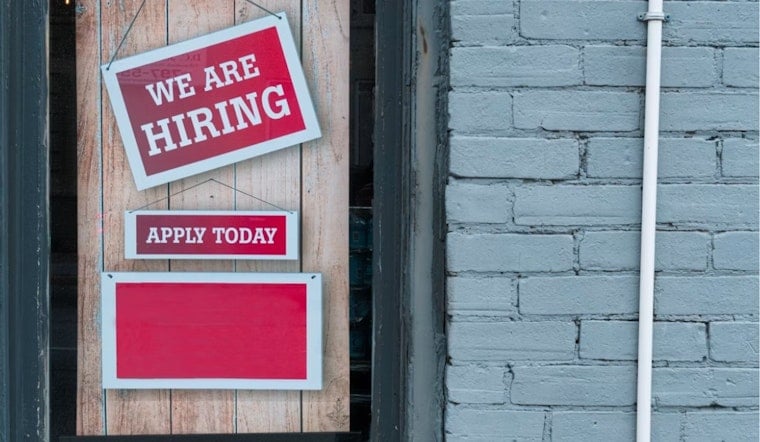
In a small Santa Rosa workshop, Renewables Inc. has a prototype that could help reinvent farm work, a founder who wants to scale up, and a problem that will sound familiar to many Bay Area small-business owners right now.
Founder Steve Heckeroth says tariffs and the removal of federal incentives have choked off the capital he needs to move his remote-control electric two-wheel tractor from prototype into full production. The eight-person shop is holding off on new hires, even as demand for the product could grow. That kind of pause is becoming more common across the region, as small employers tap the brakes on hiring in the face of economic and policy uncertainty.
National figures back up what owners like Heckeroth are feeling. According to the National Federation of Independent Business, the share of small firms that say they intend to hire has dropped to its lowest level since the COVID shutdown. The portion reporting unfilled openings has also fallen, not because the work disappeared, but because many owners are choosing to get by without filling those jobs while they wait for clearer signals from the economy and policymakers.
A Santa Rosa Shop's View
Heckeroth told CBS San Francisco his startup, which builds a remote-control electric two-wheel tractor, currently employs eight people and "could go full steam ahead" if investors stepped up to fund production. Until then, he is wary of adding payroll he might not be able to sustain.
For workers like employee Jaden Bass, that small-team setting has been a break of a different kind. Bass described how the job has given him hands-on training he did not expect to find at a larger company, the sort of informal apprenticeship that often defines life at a tiny shop.
Policy Changes Add Pressure
On top of market jitters, federal policy changes are about to push more people into the hunt for hours. Expanded work requirements for CalFresh, the Supplemental Nutrition Assistance Program, took effect on June 1, 2026, and a Medi-Cal work requirement is scheduled to start on January 1, 2027. Analysts at the Legislative Analyst's Office say those shifts will lead more adults to look for extra work to keep their benefits.
The UC Berkeley Labor Center projects that the combination of federal and state changes could reduce full-scope Medi-Cal enrollment by roughly 2.98 million Californians by 2028. In Santa Clara County alone, the center estimates about 129,000 residents could lose coverage.
Small Shops Left To Pick Up Hours
Advocates say the people most affected are unlikely to walk into a tech campus and land a job with full benefits. Instead, they will turn to corner restaurants, neighborhood retailers and small manufacturers in search of additional shifts.
Bob Brownstein of Working Partnerships USA told San José Spotlight that if those small businesses are not hiring, many residents will find it difficult to meet the new work thresholds and could end up losing both food and health coverage. It is a tight squeeze: more people are pushed to work more hours at the very moment when many local employers are freezing their staffing plans.
Why Owners Are Holding Back
Heckeroth says investors are "gun-shy" about backing new technology without clearer, more reliable government support. That leaves founders reluctant to add headcount, even as they see the potential for increased demand and part-time shifts on the horizon.
Small-business advocates note that micro and very small firms usually operate with thinner cash cushions and shorter runways than larger employers. According to the CAMEO Network, that limited buffer makes them especially vulnerable to policy swings and market shocks, and it feeds into the cautious hiring approach now showing up in surveys.
The result is a kind of tug of war: federal rules that are likely to send more people into the job market at the same time that the neighborhood shops best positioned to offer extra hours are trimming or postponing hiring plans. Local founders and national surveys say that contradiction is helping stall workforce growth across the Bay Area for the moment, a trend that lines up with projections from the UC Berkeley Labor Center.





