

























































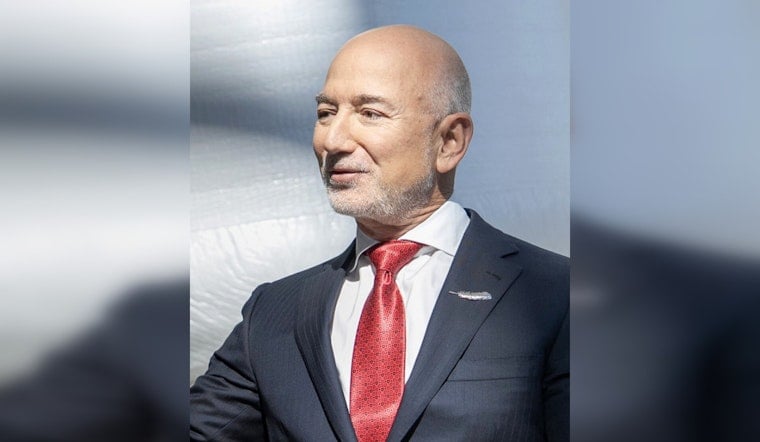
Flourish, a New York neuroscience startup that has been quietly building out a lab and AI team, has finally stepped into the spotlight with roughly $500 million in committed funding and a reported $2.5 billion valuation. Backed by Jeff Bezos, Lux Capital and Google Ventures, the company says it will fuse wet-lab neuroscience with machine-learning engineering to build "Cortex AI," a brain-inspired system that it claims will be optimized for low power use and continuous learning.
According to WIRED, Bezos initially put in $50 million, then increased his stake as Flourish assembled that $500 million war chest; the outlet reports the startup is now valued at about $2.5 billion. WIRED also names Lux Capital, Google Ventures and Catalio as some of the earliest backers.
New York venture firm Catalio Capital is listed as a co-founder and co-lead investor, Catalio co-founder George Petrocheilos wrote in an email to citybiz. The outlet notes that Catalio managing partner Dr. R. Jacob Vogelstein and venture partner Dr. Joshua Vogelstein are named founders, tying Flourish directly into Johns Hopkins' neuroscience networks.
What They're Building
Flourish co-founder Thomas Reardon says the team is aiming for "a synthetic artificial intelligence brain that runs on 50 watts or less," according to citybiz. As citybiz points out, a human brain uses roughly 20 watts, while a single AI training chip can gulp down more than 30 times that, which is exactly the efficiency gap Flourish is gunning for.
Why Investors Are Betting
Investors are clearly hoping for a major payoff if a brain-inspired architecture can slash AI's spiraling infrastructure and energy bills. Bloomberg reported in April that Flourish was in talks to raise money at a $2.5 billion valuation. The size of the commitments, plus the roster of heavyweight backers, signals a belief that efficiency and continuous learning could become the next big competitive battleground in AI.
Local Ties And Talent
WIRED visited Flourish's setup and reports that the company moved into a West SoHo building that includes a built-in data center, and had hired roughly two dozen neuroscientists and AI researchers by the end of March. The reporting highlights adviser and investor connections, including DeepMind researcher Greg Wayne and Jacob Vogelstein, that founders say will help translate lab discoveries into deployable models without getting stuck in academic limbo.
What To Watch Next
Observers will be watching to see whether Flourish starts publishing original connectomics or neuroscience results, shipping early models that draw on that work, and ramping up lab capacity at the pace its funding implies. Bloomberg noted in April that talks over valuation and terms were still ongoing and could change. For New York’s tech and life-science scene, the real proof will come from tangible research outputs and demos, not just the splashy funding numbers.





.jpg)