

























































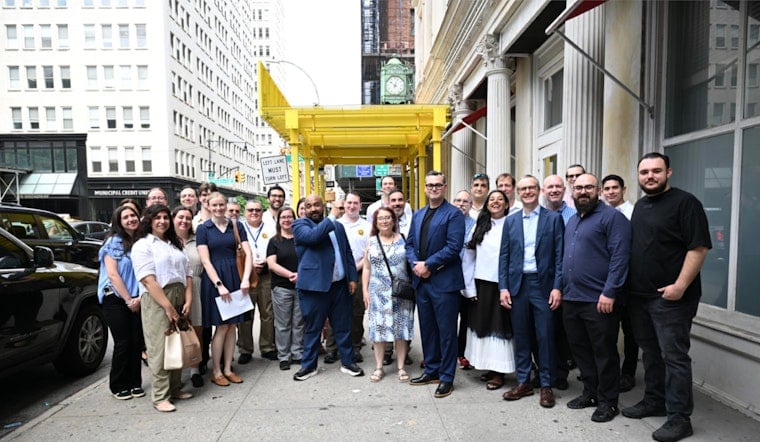
New Yorkers walking past 280 Broadway are getting a rare treat: sidewalk sheds that are not hulking, dark, or drab green. Two full-scale, candy-colored mockups went up Friday outside the Department of Buildings’ headquarters, giving passersby a first look at redesigned canopies that could eventually replace the city’s notorious “temporary” tunnels.
The Flex Shed and the Rigid Shed, two of six new concepts in the works, are built to let in more light, free up sidewalk space, and still catch any falling debris from construction overhead. Contractors installed both prototypes on site, and officials say the structures will stick around for about 30 days. The showcase is an early public test of a broader effort to shrink the miles of sidewalk sheds that have aggravated residents and strangled storefront visibility across the five boroughs.
Mockups at the Department of Buildings
The Department of Buildings set up the prototypes on the sidewalk outside its Lower Manhattan offices so people can literally walk under the new designs and compare them with the old pipe-and-plywood standards. According to the Department of Buildings, both the Flex and Rigid Sheds on display were created by the Arup design team and are part of a six-option library the city is working to formalize through agency rules.
The agency says those specifications will be open source, meaning owners and contractors will be able to use them once the rules are locked in. Officials expect that rule package to be finalized later this year.
How Big a Problem Are Old Sheds?
The short answer: very. More than 7,800 sidewalk sheds are currently scattered across the city, covering roughly 1.8 million linear feet of sidewalk, with many structures lingering for more than a year at a time, according to reporting that examined city data. As City Limits has reported, most of those sheds exist because of the city’s Façade Inspection & Safety Program, better known as Local Law 11. The five-year inspection cycle often requires close-up façade work, which in turn triggers those familiar overhead protections.
The City Council’s records lay out how FISP came to be and the statutory rules that drive many shed permits. For a deeper paper trail, see the New York City Council file on the law.
What the Prototypes Do Differently
Designers say the new systems are all about better sight lines, more daylight, and smaller footprints, while still meeting the required load capacities. Arup’s Rigid Shed, intended for heavy-duty jobs, uses longer spans and fewer columns to create a wider, less cluttered walkway. The Flex Shed is a lighter, adjustable option aimed at quicker maintenance work and emergency repairs.
According to Arup, the prototypes test out transparent decking and modular components, and local coverage noted that engineers stressed the systems meet the same loading criteria as standard sheds while allowing in more light and providing extra clearance for pedestrians. ABC7 also zeroed in on the brighter color schemes and on-site remarks from engineers at the unveiling.
Rules, Enforcement and Next Steps
The flashy mockups are tied directly to a package of proposed Department of Buildings rule changes that aim to tighten permit oversight and speed up shed removals when work stalls. The proposals include limits on automatic permit renewals and new reporting requirements for building owners.
Draft rule text and related reporting show the city is weighing shorter permit cycles, mandatory progress reports from owners, and clearer standards for when a shed must stretch beyond a property line on very tall buildings. Advocates and officials say those tools, combined with stiffer penalties and 90-day review windows described in the proposal, are meant to push long-delayed repairs forward and give sidewalk space back to pedestrians and nearby businesses.
For full technical details, the proposed rules and analysis are posted on the city’s rulemaking portal at Rules.CityOfNewYork.us.
What Officials Say
“These redesigned sheds will bring more light, more air, and more room to move,” Deputy Mayor Leila Bozorg said at the unveiling, adding that the new designs will help New Yorkers “see the sky” while still shielding people from hazards overhead.
Buildings Commissioner Ahmed Tigani called the Broadway mockups a concrete way for residents to experience the options in real time and said the department will keep up public outreach as the rule package moves through review. The department’s release reiterates that the final specifications will be open source and available to owners and contractors once the rules are adopted. Department of Buildings



